
Yes, an acrylic bathtub can be refinished, and done professionally the result restores the deep gloss acrylic owners remember from the tub’s first years. The complete answer includes the conditions, because acrylic is the most chemistry-sensitive tub material there is, and who does the work matters more here than on any other surface.
Why Acrylic Owners Doubt It
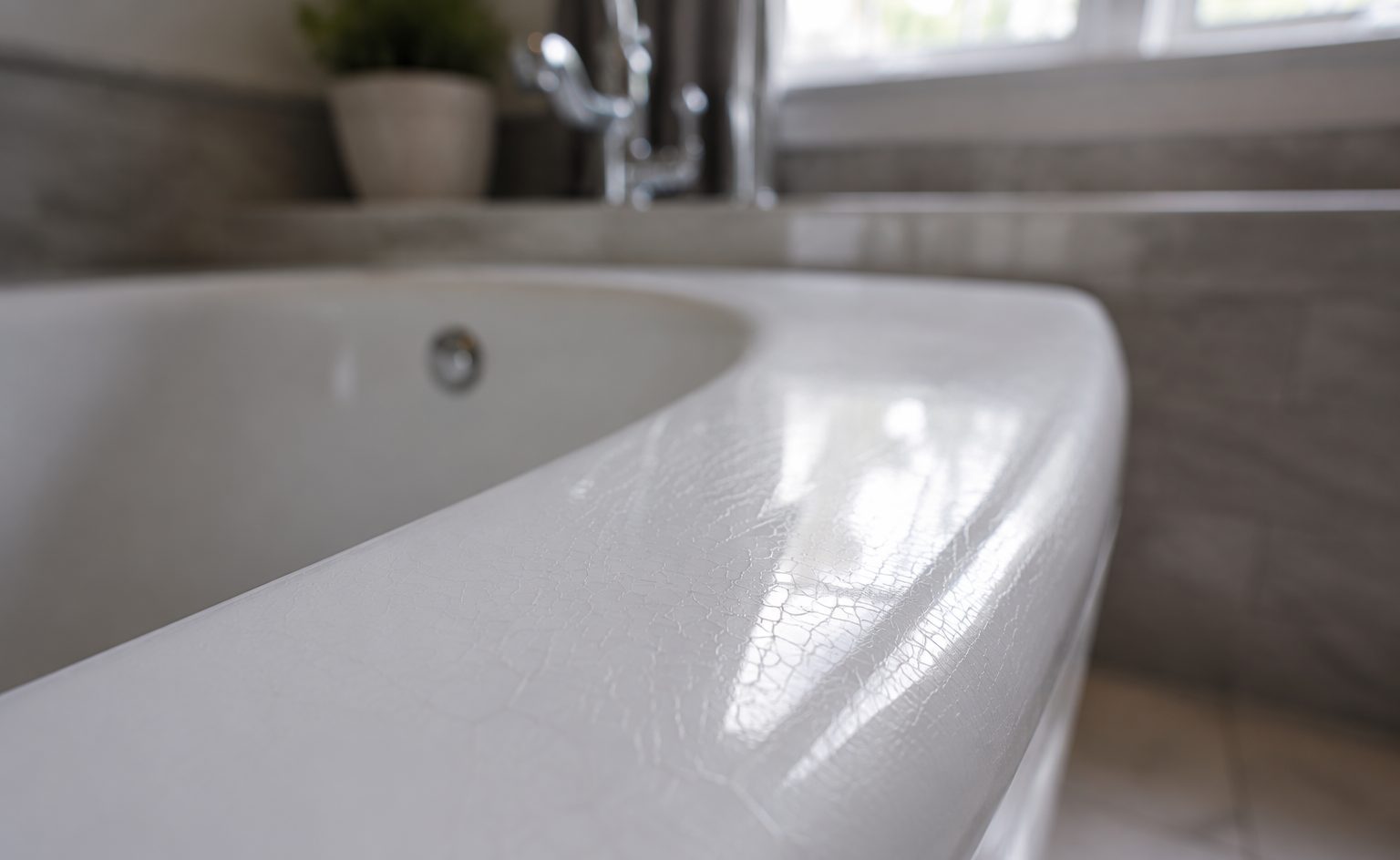
Acrylic ages in ways that look permanent: fine spider crazing across the surface, a haze of micro-scratches from years of cleaning, gloss gone flat, sometimes discoloration that no product touches. All of it lives in the material’s surface layer, and surface layers are precisely what refinishing replaces. The doubt is understandable; the damage is almost always shallower than it looks.
What Makes Acrylic the Sensitive Case
Acrylic is a plastic shell: the wrong solvent softens it, the wrong abrasive gouges it, and a coating over under-prepared acrylic releases sooner than on any other tub. Professional refinishing calibrates every stage to the material, from cleaning chemistry to mechanical preparation to the coating system itself. This is the tub where the question to ask any company is not whether they refinish tubs but whether they can describe their acrylic process specifically.
The Crazing Question, Answered With a Press
Fine surface cracks are the symptom that sends acrylic owners searching, and most crazing is cosmetic: confined to the surface, repairable, and coated over cleanly. The thirty-second test that sorts it: press gently beside the cracking with a flat palm. Stillness means surface crazing and the refinishing conversation proceeds; movement means the shell is compromised there and the conversation is structural. Report the result with your photos and the assessment is mostly done.
When the Answer Is No
Cracks that flex, breaks that pass through the shell, and shells damaged at their reinforcement are replacement territory, and acrylic one-piece units share the fiberglass replacement trap: cutting out and rebuilding. That trap cuts both ways, making the refinishing yes more valuable when it applies and the honest no more important when it does not. We give both from photos, before anything is scheduled.
What the Professional Process Looks Like
Material-safe cleaning and de-glossing, crazing and scratch repair, careful mechanical preparation, then controlled coats under our 24-Hour Spa Shell Transformation Method, with the finish curing for 24 hours after the final coat before bathing resumes. The full service detail, jetted units included, lives on our acrylic bathtub refinishing page.
The Cleaning History That Got the Tub Here
Most acrylic damage is well-intentioned: abrasive pads and harsh chemicals chasing soap scum, each pass trading gloss for clean until neither remained. The refinish resets the surface, and the aftercare is simpler than the routine that caused the damage: non-abrasive cleaners and soft cloths, nothing else. The new surface asks less of you than the old one did.
Refinish Now or Replace Eventually?
For a structurally sound shell, refinishing wins the comparison on every axis that matters in an occupied home: cost, disruption, timeline, and the walls staying where they are. The framework at is it worth it to refinish a bathtub walks the decision fully, and acrylic sits comfortably inside its logic once the press test comes back still.
The Short Answer, Expanded Once
The yes for acrylic is a professional yes: this is the one tub material where the identity of the applicator changes the answer’s reliability. Sound shell plus calibrated process equals a finish that serves for years; sound shell plus generic process equals the early failures that gave acrylic refinishing a reputation it never earned.
The material was never the problem; the shortcuts were.
Selling or Listing With an Acrylic Tub
Pre-listing acrylic refinishes are their own steady category: buyers photograph bathrooms first, crazing and haze read as neglect in photos even when they are just age, and the refinished shell photographs clean and current for a fraction of what any remodel line would cost weeks before a sale. Agents who have seen the difference send their listings to us on a schedule.
How Acrylic Compares to the Other Answers
Across the material family, the pattern holds with different accents: iron rewards refinishing most, fiberglass adds the soft-floor question, and acrylic adds the chemistry one. The companion answers at can fiberglass bathtubs be refinished and can you refinish a cast iron bathtub walk their materials the same way, and identifying yours correctly is the first step this whole family of questions shares.
Living With the New Surface
Post-cure care is deliberately boring: non-abrasive cleaners, soft cloths, suction-cup mats not left stuck for weeks, drips fixed before they etch. The regimen is lighter than the escalating cleaner war that aged the original surface, and the finish holds its gloss precisely because nothing in the routine attacks it.
Acrylic or Fiberglass? Telling Them Apart
The two materials get confused constantly, and the distinction matters because their preparation differs. Acrylic feels warmer to the touch, shows color through its thickness rather than as a surface coat, and its scratches reveal the same color underneath. Fiberglass gel coat scratches show a different layer below, and the material reads slightly cooler and harder. If you are unsure, photograph a scratch up close; we identify the material from exactly that.
Jetted and Whirlpool Shells
Jetted acrylic refinishes on the same terms with jets and fittings masked and protected. A failing jet trim ring or fitting is its own small repair, flagged in your photos so the plan includes it; the refinish renews the shell, and honest scoping keeps the two jobs distinct.
Yellowing and Discoloration
Age, ultraviolet light, and chemical history can shift acrylic’s color in ways no cleaner reverses, because the shift lives in the surface layer itself. Refinishing does not bleach the old surface; it replaces it, which is why discoloration, the symptom owners consider most hopeless, is among the cleanest fixes on the list.
What a Failed Acrylic Kit Looks Like
Peeling at the water line, hazing across the walls, and edges lifting where the old coating ends: acrylic shows kit failure early because the material rejected the shortcut preparation. Removal is the first stage of the professional job, we quote it from photos, and the only unwelcome version is the undisclosed one.
Household Logistics
The bathroom is out of service for the work window plus the 24 hour cure, and that is the entire disruption: no demolition day, no trades parade, no dust migration through the house. For one-bathroom households, that timeline is usually the deciding argument all by itself.
Rentals and Property Portfolios
Acrylic and its problems repeat across modern rental stock, and so does the solution: photos per unit, one crew day, predictable cure, and bathrooms that photograph current for listings. Portfolio owners standardize on refinishing because the math never changes unit to unit.
Why Some Companies Decline Acrylic
You may meet refinishers who hesitate at acrylic, and the hesitation is informative: the material punishes uncalibrated process, and companies that know their process is generic decline the surface that would expose it. A specialist answers the acrylic question with specifics instead of hesitation, and the difference is audible in one phone call.
To see our completed projects and what customers say, read our verified customer reviews and testimonials.
Your Two-Photo Answer
One photo of the whole tub, one close on the worst area, plus the press test result, through our free quote page or at (818) 858-1150. Acrylic assessments from good photos are fast and reliable, and the reply includes the honest no on the occasions the photos earn it. Transformations live in the gallery.