
Yes, a cast iron bathtub can be refinished, and no tub rewards it more. The casting under the enamel is effectively permanent; only the surface ages, which makes enameled iron the best refinishing candidate in the trade and the material where replacement is most often the wrong call. Here is the complete answer, rust and all.
Can You Change Your Bathtub Color?
JLF Tub & Tile Reglazing Site Map
Why Cast Iron Is the Best Case
A cast iron tub is a single heavy casting wearing a fused enamel surface. The casting does not warp, flex, or fatigue on any human timescale; every symptom that makes the tub look finished, wear, stains, chips, rust, dullness, lives in or on the surface layer. Refinishing renews exactly that layer, which is why seventy year old iron tubs routinely come back looking newer than fifteen year old budget units ever will again.
The Rust Question, Head On
Rust is what convinces owners their iron tub is done, and rust is precisely what honest refinishing handles: staining removed, active corrosion neutralized at its source, rust-through spots at the drain or overflow repaired and filled before any coating is applied. The defining mistake of cheap work is coating over live rust, which turns a finish into a countdown. Ask any company how they treat rust before they coat; the answer tells you who they are.
Chips, Wear Rings, and the Drain Zone
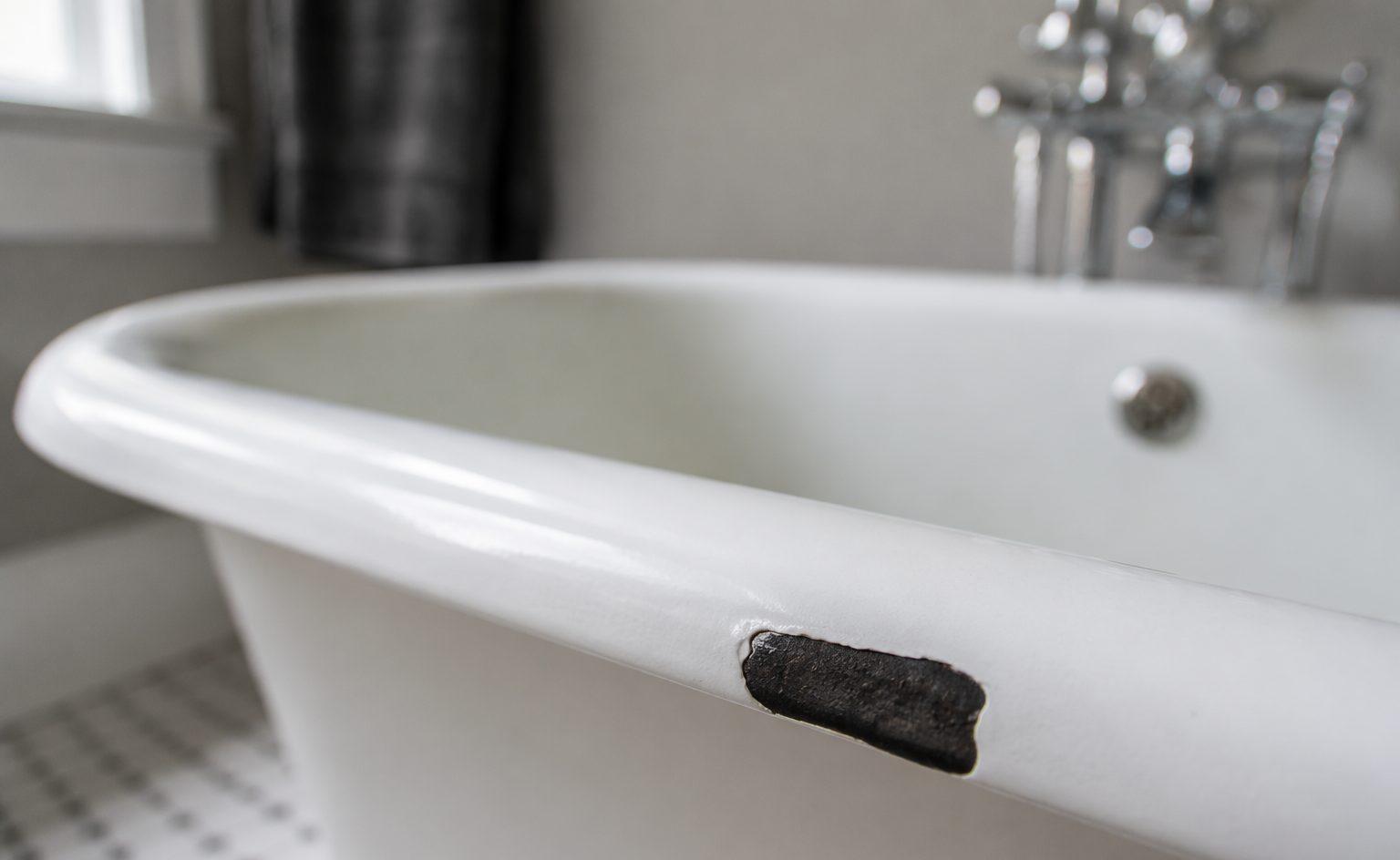
Enamel chips expose dark iron and look dramatic; they repair and level as routine preparation. The worn ring at the water line and the dull track to the drain are the tub’s normal wear signature, not damage categories of their own. All of it disappears under the renewed surface, which is the entire point.
When the Answer Is No
A crack through the casting itself, which is rare and usually the biography of something heavy being dropped, is the honest disqualifier. Iron tubs essentially never wear out; they get broken or they get renewed. A photo of any crack settles which conversation yours is, and we have the replacement conversation without flinching when the photo earns it.
Built-In or Clawfoot: Same Material, Different Jobs
The built-in alcove tub refinishes in place with the surround masked, and pairs naturally with shower tile reglazing in the same visit. The freestanding version is its own specialty, exterior and feet included, covered fully on our clawfoot tub refinishing page. Both stand on the same material logic: permanent casting, renewable surface.
Why Replacing Iron Is the Painful Path
An alcove iron tub weighs hundreds of pounds and was tiled in before the room was finished. Replacement means demolition of the surround, extraction of the casting, plumbing work, wall repair, and retiling, with the new tub almost certainly a lighter, shallower object than the one removed. The refinish completes inside a 24 hour work window with a 24 hour cure after the final coat, and the tub you keep is the better tub.
The Same Logic in the Kitchen
Houses with one enameled iron fixture usually have two, and the kitchen basin ages the same way for the same reasons. Our cast iron sink reglazing page covers that side, and pairing tub and basin in one visit is common and efficient.
Color: Restore or Reinvent
Renewal to classic white is the default; a deliberate color change is the same job with a different final decision. Vintage iron in a modern color is one of the strongest transformations in our gallery, and the choice costs conversation, not complexity.
Iron in the Listing and the Turnover
For sellers and landlords the iron tub is an asset wearing a disguise: buyers and tenants read original cast iron as quality once it gleams, and as neglect while it wears rust. The refinish flips which story the same tub tells, which is why pre-listing iron work is a weekly rhythm for us and why property managers renew original tubs instead of swapping them for lighter, lesser replacements.
The Question Behind the Question
Owners asking whether iron can be refinished are usually really asking whether the tub they love has to leave. It does not. The material most worth keeping is also the material most renewable, which is the rare case where sentiment and economics vote together, and the photos exist to confirm what the question already hoped.
Steel Tubs: The Close Cousin, Same Yes
Enameled steel tubs, iron’s lighter cousin, also refinish well: same enamel surface logic, thinner substrate underneath. The magnet sticks to both; the tap and the rim flex tell them apart. Chips and rust behave the same way on both and get the same treat-at-the-source handling, so if your checks come back steel rather than iron, the answer of this post still stands.
The Overflow and Faucet Wall
Wear concentrates where water and hands live: around the overflow plate, under the faucet, and along the front rim where the household leans. Those zones get the closest repair attention because they get the closest daily inspection from everyone who uses the tub, and a renewal that nails them reads flawless everywhere else for free.
How to Tell Your Tub Is Cast Iron
Three checks settle it:
- The tub feels cold to the touch and warms slowly.
- A knuckle tap rings dense and dead rather than hollow.
- A fridge magnet sticks firmly through the enamel.
Steel tubs also take a magnet but sound thinner and flex slightly at the rim; plastic materials fail all three checks. Two minutes and you know what you own, which changes what every quote should say.
Antique and Pre-War Tubs
The oldest tubs are often the best candidates of all: pre-war castings are heavy, deep, and shaped in ways modern production abandoned, and their enamel wear is purely cosmetic history. Refinishing one is preservation with a practical payoff, and it is the same logic that drives our clawfoot work daily.
Hard Water and the Iron Tub
Local water leaves mineral etching and the stubborn track from faucet to drain, and years of abrasive cleaners chasing it finish what the minerals started. That combination is the standard biography of the Los Angeles iron tub we meet, and it is entirely a surface story with a surface solution.
The Apron and the Surround
A built-in tub’s apron face refinishes as part of the tub, one continuous surface. The tile above it is its own surface with its own service, and renewing both in one visit is the version where the whole alcove comes back matching, with one setup and one cure window shared.
Refinished Before? Still Yes
Previously coated iron refinishes again: the old coating strips, the surface returns to sound enamel, and the standard job proceeds. The count-versus-condition logic lives at how many times can you reglaze a tub, and iron is the material where the answer is most generous.
Buying One Secondhand?
Evaluating a salvage or estate tub before purchase is a photo conversation we have weekly: send pictures before committing the truck, and we will tell you what restoration involves and whether the casting deserves it. Almost always it does; the exceptions are exactly the cracks this post already taught you to find.
customer reviews and completed project gallery
Getting Your Iron Tub Its Answer
Photos of the tub and the worst areas through our free quote page, or (818) 858-1150, with a note on anything that sounds hollow when tapped. The economics live at is it worth it to refinish a bathtub, and for iron they are rarely close.