
The cheapest way to refinish countertops depends on which question you are actually asking: cheapest this weekend, or cheapest per year the counter serves you? Those two questions have different answers, and most of the regret we hear from Los Angeles homeowners comes from answering the first while meaning the second. Here is the honest ladder, from a company that sits on one rung of it.
Rung One: Paint Kits
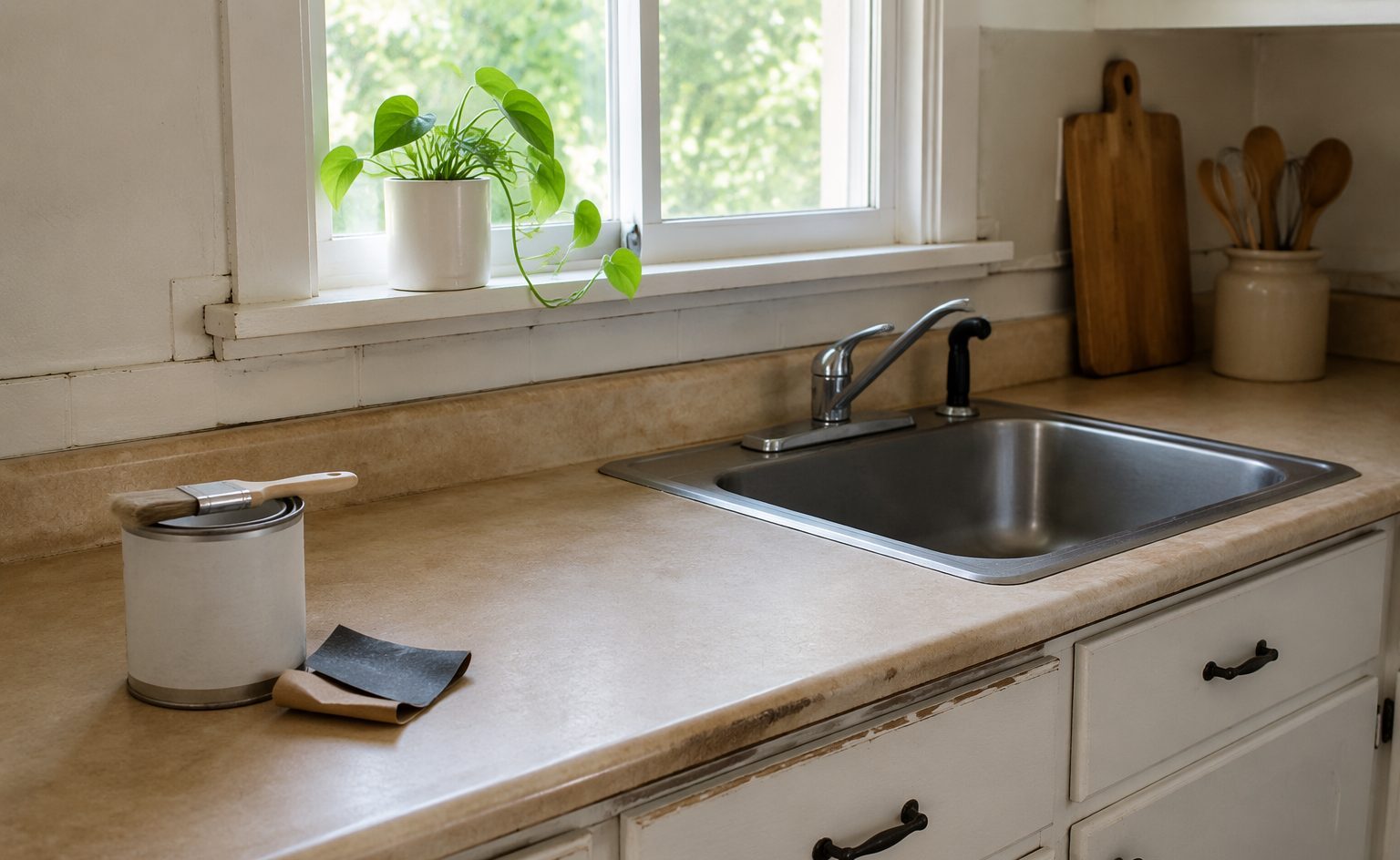
Countertop paint kits are the cheapest upfront option, and on the right surface in the right room they can be fine. Their weakness is not the paint; it is the preparation the instructions cannot make you do. Counters are engineered to shed things, coatings included, so kit finishes tend to chip at edges and wear through exactly where hands, pans, and bottles land. In a low-stakes space they earn their price. In a working kitchen they usually become the thing you cover up next year.
Rung Two: DIY Epoxy
Poured epoxy kits produce a thicker, harder result than paint, and the internet is full of gorgeous first-day photos. The tradeoffs: the pour is a one-shot process with no undo, the working time is unforgiving, ventilation and dust control matter more than the videos suggest, and repairs later are difficult to blend. Skilled, patient DIYers get real results. Everyone else gets a permanent record of the afternoon they had.
Rung Three: Professional Refinishing
Professional refinishing costs more than a kit because the price buys the parts a kit cannot include: repair of burns and chips before coating, surface preparation that makes the finish permanent instead of temporary, controlled application, and someone accountable for the result in year two. The transformation completes inside a 24 hour work window and cures for 24 hours after the final coat. Per year of service, this is usually the cheapest rung on the ladder for a kitchen or bathroom that gets used.
Rung Four: Replacement
New counters are the most expensive path and sometimes the right one: failed substrates, lifting laminate, or a remodel that changes the layout all point there. When that is what we see at an assessment, we say so and step aside.
The Hidden Costs of Each Rung
Kits hide their true price in the redo: the first application is cheap, and the second one, a year later, plus the hours both times, is where the money actually went. Epoxy hides its price in the supporting cast: the respirator, the torch, the leveling supplies, the drop protection, and the practice board you should have bought. Professional refinishing hides nothing: the invoice is the total, and the accountability is part of what it buys. Replacement hides its price everywhere: in the plumber, the disposal fee, the fabrication wait, and the discovery behind the old counter.
A Realistic Weekend Audit
Before choosing DIY on a working kitchen, audit the weekend honestly: full clearing and degreasing of every surface, methodical sanding or etching, taping and masking the whole zone, ventilation planned rather than hoped for, application windows measured in minutes, and the kitchen out of service through the cure. Skilled hands with patience clear that bar. Most households discover mid-project that the bar was higher than the video made it look, with the counter half done and dinner unsolved.
When DIY Is Genuinely the Right Call
A garage workbench top. A laundry room counter. A craft table. A surface in a rental you are leaving, with the landlord’s blessing. Any place where failure costs little and the project itself is the fun. We mean it when we say a kit and a free weekend are sometimes the right answer; the mistake is not DIY, it is DIY on the one counter the whole house depends on.
Cost Per Year, in Principle
Divide any option’s true total by the years it honestly serves, and the ladder reorders itself. A kit that gets redone or covered inside two years is expensive per year no matter how cheap the box was. A professional finish serving for many years spreads one invoice thin. Replacement serves longest but starts from the biggest number, so it wins per year only when the counter underneath was truly done. That division, not the sticker, is the honest comparison.
The Middle Path Nobody Mentions: Partial Scope
Sometimes the cheapest honest answer is refinishing less: only the damaged run beside the stove, only the island that takes the abuse, only the bathroom vanity while the kitchen waits its turn. Partial scope works when the untouched counters still look acceptable beside renewed ones, and we will tell you plainly when they will not, because a half-renewed kitchen that argues with itself is nobody’s bargain. Asking about partial scope costs nothing and occasionally saves a lot.
The Question Behind the Question
People asking for the cheapest way are usually asking something kinder to themselves: how do I get a kitchen I stop apologizing for without spending remodel money? That version has a clean answer. Fix what the eye lands on first, which is almost always the counters, choose the rung whose failure you can live with, and spend where daily use is highest. Answered that way, the budget conversation stops being about deprivation and starts being about sequence.
How to Compare Bids on Equal Terms
Line any two bids up by what they name, not what they total: which repairs are included, what preparation is described, how the cure is specified, and who answers the phone in year two. A cheaper bid that names less is not cheaper; it is incomplete, and incompleteness invoices later. Once bids are normalized to the same named scope, the real price difference is usually small and the accountability difference usually is not.
What the Photos Never Show
Every rung of the ladder photographs well on day one, which is why day-one photos decide nothing. The comparison that matters happens at month eighteen: where the finish meets the edge, where the coffee maker slides, where the sink splashes daily. Professional preparation is invisible in photographs and unmistakable in month eighteen, and that gap is the entire reason the ladder has rungs instead of one obvious answer.
One Honest Sequencing Tip
Whatever rung you choose, do the counters before repainting cabinets or walls, not after. Counter work, professional or DIY, is the messier stage, and sequencing it first protects the fresh paint you would otherwise be masking around. Kitchens renewed in that order finish cleaner for the same money.
Landlords Run This Math at Scale
Property managers choose per-year cost by profession, which is why they land on professional refinishing again and again: turnover timelines rule out replacement, unit economics rule out remodels, and kit failures multiply across doors. One work window per unit, a 24 hour cure, and kitchens that photograph current across a whole building.
The Real Answer
Cheapest today: a paint kit, eyes open, in a room where failure is cheap. Cheapest per year of service on counters you actually use: professional refinishing, and it is not close once a kit gets redone or covered. Every project is quoted individually; photos through our free quote page get you an honest number and an honest recommendation, including the times the recommendation is a kit and a free weekend.
Where Each Path Leads
If your counters are laminate, our laminate resurfacing page explains the hard-case material honestly. Bathroom vanity tops live on the bathroom countertop page, and the full service picture is on the countertop refinishing page. Questions either way: (818) 858-1150.