
Rental sinks age faster than any fixture in the unit, and sink reglazing is how Los Angeles operators renew them without opening a wall, disturbing a counter, or losing a week of the turnover: one visit per unit, a 48 hour cure, and a basin that photographs new. This post is the rental version of the sink story, written for landlords, property managers, and small portfolio owners, because the decision math, the scheduling, and the care logic all change when the sink belongs to a business instead of a household.
Why Rental Sinks Age First
Nobody babies a sink they do not own. Rental kitchen sinks take hot pans, steel wool, bleach experiments, and years of tenants who never read a care sheet, and rental vanity basins collect the cosmetics, dyes, and hard water film of every lease that passes through. The wear is honest and predictable, which is exactly why it is manageable: it is surface wear, it arrives on a schedule the turnover calendar already knows, and surface renewal is built for it.
The Listing-Photo Problem
Prospective tenants read the sink the way buyers do: as a proxy for how the whole unit is kept. A stained, chipped basin in the listing photos prices itself into the rent conversation and invites the first walkthrough objection, while a gleaming one deletes the line item entirely. Kitchens carry the effect hardest, because kitchen photos anchor every listing, and the sink sits in the middle of the frame.
What the Renewal Does in a Unit
- Stains, dullness, and hard water film stripped of their grip
- Chips and rust repaired to the surface line before any coating
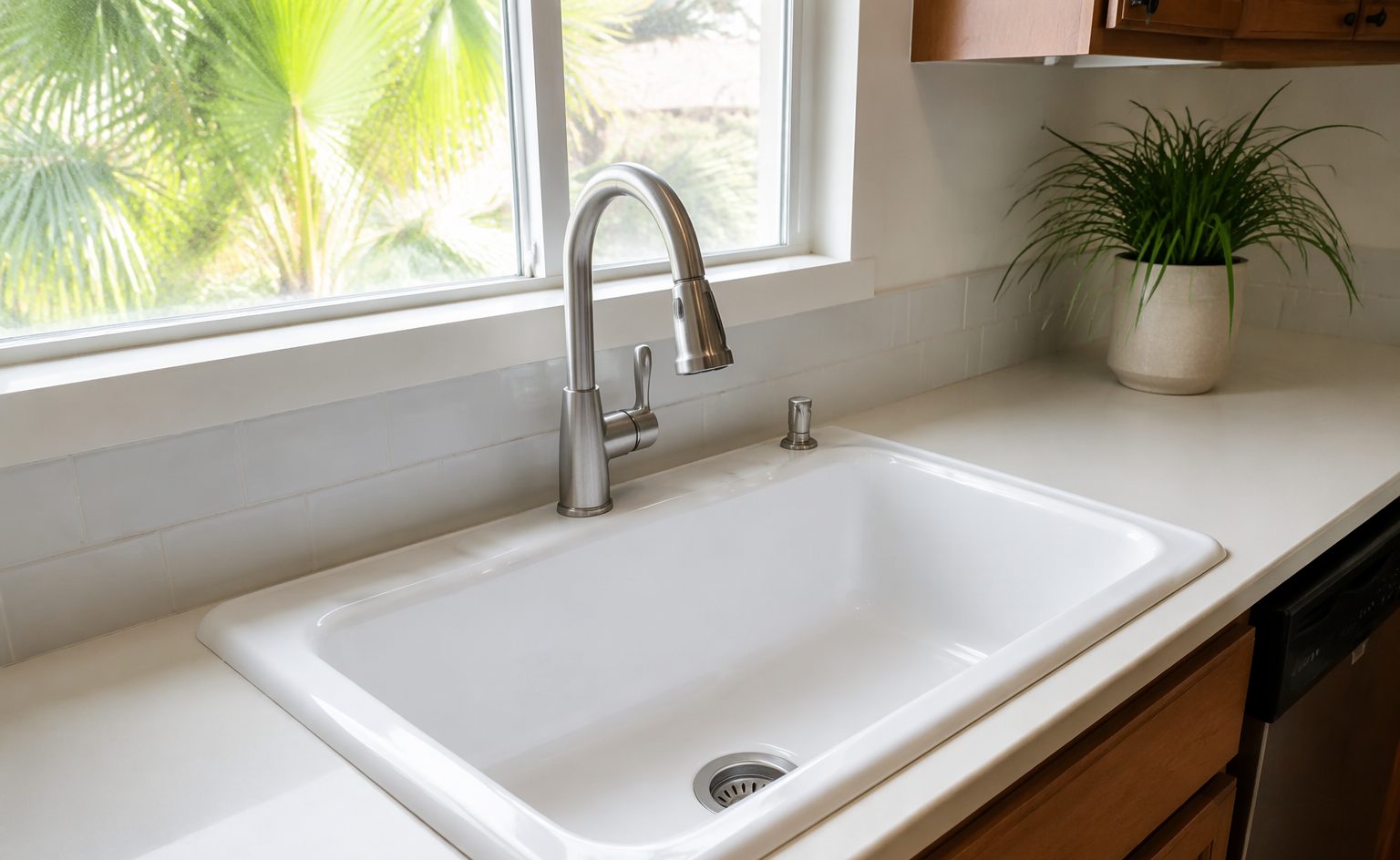
- A new poured finish built in controlled coats to a clean gloss
- The faucet, plumbing, and counter untouched throughout
The full craft sequence lives at how sink reglazing works, and the operational summary is the part operators care about: one crew visit, everything left connected, and the unit’s kitchen or bathroom back in service after the cure.
The Turnover Week Fit
The renewal slots into a standard vacancy week the same way tub work does: the visit books early in the turnover, the 48 hour cure runs alongside paint, cleaning, and repairs that need no water at that fixture, and the unit photographs before listing. The week-level playbook, written for tubs but identical in rhythm, is at rental turnover bathtub reglazing, and the sink line rides it without adding a single day of vacancy.
Batching Across Units
Portfolio work rewards batching: multiple units renewed in coordinated visits share mobilization and scheduling overhead, and buildings with a known fixture stock quote tightly after the first few jobs because the sinks repeat. Operators who already run tub and surface renewals through their turnovers add the sink line inside the same vendor relationship, the same scheduling conversation, and often the same visit.
Kitchen Sinks and Vanity Basins, Unit Edition
Both fixtures carry the rental years, differently. Kitchen sinks arrive with the heavier damage, chips at the basin floor, rust at the drain, the occasional failed kit from an ambitious former tenant, and the kitchen story in full is at kitchen sink reglazing. Vanity basins carry film, dye stains, and rim chips, covered at bathroom vanity sink reglazing. A unit turnover that photographs both usually renews both, in one visit.
Damage Triage, Rental Edition
The triage rules do not change for rentals, and pretending they do is how operators buy callbacks. Chips, stains, surface rust, and failed kits are the ordinary jurisdiction of the renewal; rust that has eaten through the basin, cracks that flex under pressure, and active leaks below route to their own trades first. The honest boundaries, with the palm test and the photo spec, are at fixing a chipped, cracked, or rusted sink, and the quote reply applies them to your photos rather than to hope.
The White Standard for Portfolios
Most operators standardize on white, and the logic is operational rather than aesthetic: white photographs clean, matches every unit’s palette, hides no rinsing residue from inspection eyes, and makes every future turnover’s renewal a match instead of a decision. The color conversation in full, including when a deliberate change earns its place, is at changing your sink color, and the portfolio answer to it is usually one word long.
The Care Card and the Tenant
The cheapest durability program a landlord can run costs a page and a bottle: the one-page care rules handed to the incoming tenant, and a non-abrasive cleaner supplied under the sink. Units that get both return long finishes; units left to guess return short ones. The finish does not know it is in a rental, it only knows what touches it, and a landlord controls more of that than the lease suggests.
The Operator’s Ledger
After the first few units, your own history prices the work better than any estimate, and photo quotes confirm rather than surprise. The quote anatomy, what builds the number and why condition drives it, is at sink reglazing cost in Los Angeles, and the number that matters most in the ledger is the one that never appears: the counter surgery, plumbing visit, and vacancy days that replacement would have added to every one of those turnovers.
When Replacement Is the Rental Answer
Sometimes it is, and saying so keeps the program honest. A basin rusted through, a cracked sink that flexes, or a unit whose kitchen is being gutted anyway belongs in the replacement column, and the reply from your photos will say so plainly. Everything short of those, which is most of what turnovers present, renews for a fraction of replacement’s whole scope and none of its schedule risk.
The Occupied-Unit Question
Not every sink can wait for a vacancy, because a failing basin is a tenant-complaint generator and a work-order magnet between leases. Occupied-unit renewals run on the same craft with tighter choreography: the visit is scheduled with the tenant, the kitchen or bathroom is masked and protected, and the household plan for the 48 hour cure, dishes in the bathroom or bathing arrangements for a vanity job, is agreed before the crew arrives. The full occupied-unit protocol, notices, access, and the communication script, lives inside the portfolio system linked below.
The operator’s math on occupied work is simple: a renewal scheduled on your terms this month beats an emergency replacement negotiated through a complaint next quarter, and the tenant who watched the sink come back new becomes the easiest renewal conversation in the building.
One scheduling note earns its sentence: occupied kitchen jobs book best early in the tenant’s week, so the 48 hour cure spends itself on weekdays and the weekend arrives with the sink back in service, a small courtesy that costs the calendar nothing and buys goodwill that outlasts the lease.
To see our completed projects and verified customer reviews, read verified Rentals Sink Los Reglazing Apartments Angeles customer reviews and testimonials.
The System View
Operators running surface renewal as a program rather than a rescue treat the sink line the way they treat tubs: a standing turnover item, batched where possible, quoted from photos, and warrantied in writing. The full portfolio system, vendor tests, occupied-unit protocol, and warranty-as-workflow, is at bathtub reglazing for property managers, and the sink chapter of it starts with photographs of your worst unit. Send them through the free quote page or call (818) 858-1150, and the whole service picture lives at sink reglazing.