
Ceramic Floor Tile Refinishing in Los Angeles
Floor tile takes more abuse than any other surface in the house, and it shows: worn traffic paths, grout gone dark, colors that date the whole room. Ceramic floor tile refinishing renews the floor in place, without the dust, cost, and days of a tear out. It is the floor-grade branch of our ceramic tile refinishing service for Los Angeles homes.
The Short Answer on Refinishing a Tile Floor
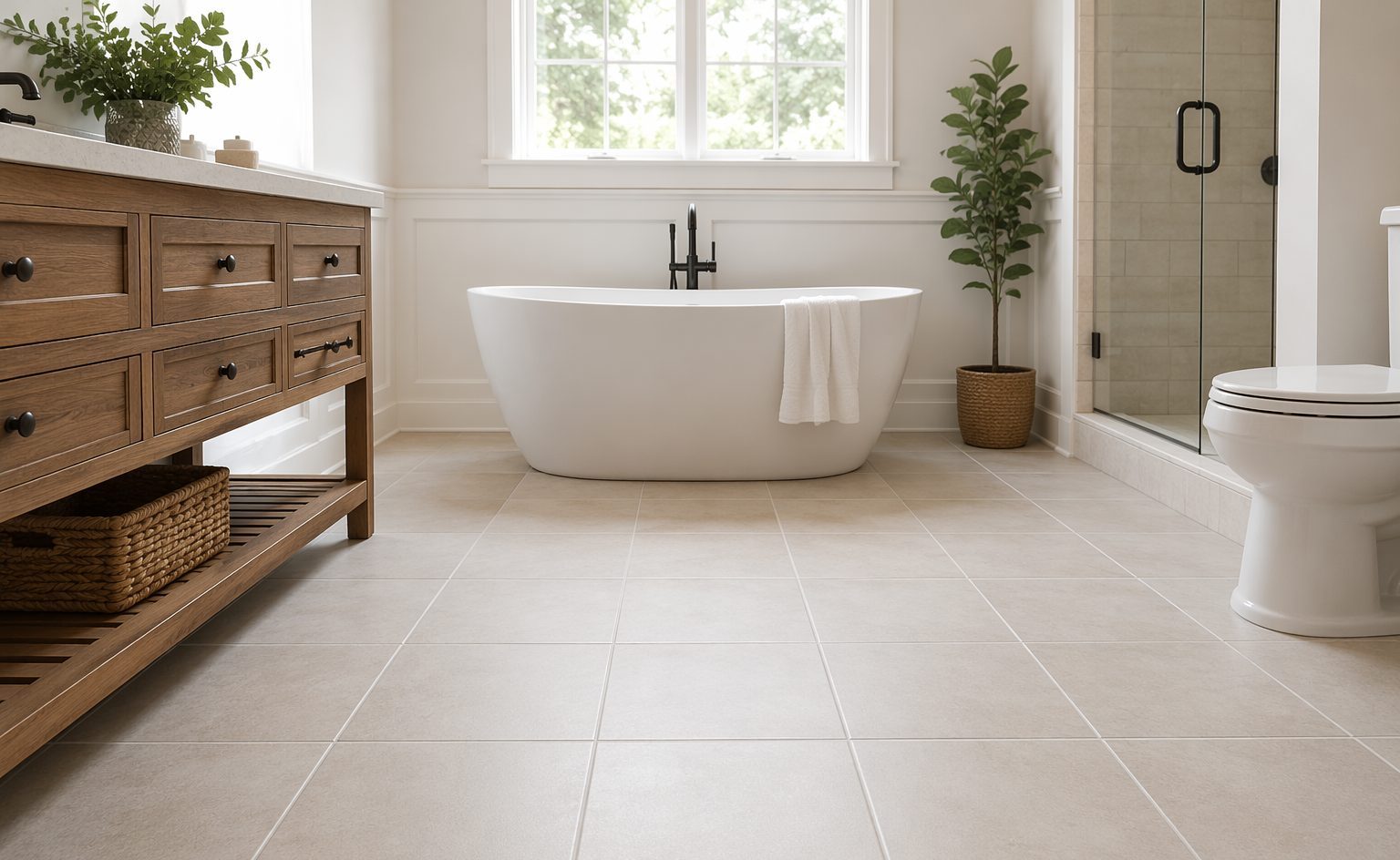
Ceramic floor tile refinishing restores a worn tile floor by bonding a new wear surface onto the existing tile, grout lines included, without demolition. JLF Tub and Tile Reglazing refinishes floor tile in Los Angeles homes when three conditions hold: the tile is fully bonded with no hollow or flexing spots, the grout is intact rather than soft or failing, and the room can be protected and ventilated for the work. The floor returns to service after a 24 hour cure, in a finish and color chosen at the consultation rather than inherited from the original installation. Floors that fail the inspection are repaired first or steered honestly toward the right trade instead, because a coating over a moving floor fails early no matter who applies it. The result on a qualifying floor is a uniform, cleanable surface at a fraction of replacement disruption.
What Floors Qualify
Sound ceramic and porcelain tile floors are strong candidates: kitchens, bathrooms, entries, and laundry rooms. The tile needs to be well bonded and the floor beneath it stable. Cracks that trace the lines of slab movement, hollow-sounding tiles, and floors with active moisture problems are replacement or repair conversations first, and our assessment says so plainly before any coating is discussed.
The Process, Floor Edition
Deep cleaning and degreasing come first, because floors carry years of contamination that would defeat any coating applied over it. Repairs follow, then etching, then the coating applied in controlled coats under the 24-Hour Spa Shell Transformation Method, with the finish curing for 24 hours after the final coat before regular traffic returns. For bathrooms and entries we build a non-slip additive into the finish, so the renewed floor is safer than the glazed tile it replaces.
Rooms We Refinish Most
Kitchen floors take grease and traffic and show wear paths first; refinishing erases the paths and seals the grout that trapped years of it. Bathroom floors pair naturally with a tub or surround job, one visit for the whole room. Entryways carry grit that dulls glaze, and laundry rooms collect the scuffs of appliances dragged an inch at a time. All of them come back with the same process, and the non-slip additive earns its place in every one of them.
Grout Lines, Solved
Floor grout is the part everyone has scrubbed on their knees and lost to anyway. Under a refinished floor, the grout lines are sealed beneath the continuous finish: still visible as texture if you want the tile look preserved, but no longer porous, no longer darkening, and cleaned with a mop pass instead of a brush.
Apartments and Upstairs Units
Floor replacement in an upstairs unit means demolition debris carried through the building, dumpster logistics, and noise the neighbors will remember. Refinishing arrives in a few cases of equipment, adds no meaningful weight to the floor, and leaves through the same door it came in. For condos and apartments, that difference is often the entire decision, and HOA rules that make demolition painful make refinishing the only realistic path to a renewed floor.
There is also a structural reason refinishing suits upper floors: weight. Overlay and replacement materials note their own load realities, and tile plus mortar is heavy enough that flooring guides flag it as a consideration on upper stories. Refinishing adds a coating measured in fractions of a millimeter to tile that is already part of the building. Nothing new is carried upstairs, nothing structural changes, and the unit below never hears a demolition day.
Radiant Heat and Older Slabs
Floors over radiant heat refinish well because nothing about the process disturbs what is below the tile, unlike demolition, which puts a jackhammer over your heating lines. Older slab-on-grade floors common across Los Angeles are equally good candidates as long as the tap test comes back solid; age alone disqualifies nothing, and some of our best transformations are floors older than their owners.
Matching Adjacent Rooms
Connected floors deserve one color conversation, not four separate ones. When a kitchen flows into a hallway or a bathroom opens off a bedroom with visible flooring, we plan the color so the refinished floor complements what it touches instead of arguing with it. Bring photos of the adjoining rooms to the quote and the plan accounts for them from the start.
Care After the Cure
After the 24 hour cure, the floor lives on non-abrasive cleaners, felt pads under furniture that slides, and mats at exterior doors where grit arrives. That is the whole regimen. What kills any finished floor, original glaze included, is dragging appliances and scouring powder, and skipping both is free.
Refinish, Overlay, or Replace?
Replacement makes sense when the substrate is failing. A concrete overlay is a look some homeowners want, and it comes with tradeoffs worth understanding before committing; our guide to resurfacing a tile floor with concrete lays them out honestly. For a sound floor whose problem is appearance, refinishing wins on cost, mess, and time, and keeps your floor height and transitions exactly where they are.
Frequently Asked Questions
Can floor tile really be refinished?
Yes, when the tile and the floor under it are sound. Ceramic and porcelain floor tile take a properly applied floor-grade coating well. Tile that is cracking because the slab or subfloor beneath it is moving is a different problem, and we tell you that at the assessment rather than coating over movement.
Will a refinished floor be slippery?
A non-slip additive can be built into the finish, and for bathrooms and entryways we recommend it. Traction is part of the same conversation as color and gloss when we plan your floor.
How long before we can walk on it?
The transformation completes inside a 24 hour work window, and the finish cures for 24 hours after the final coat before the floor returns to regular traffic. Plan around that window and the result rewards the patience.
Can we change the floor color?
Yes. Dated floor colors are one of the most common reasons Los Angeles homeowners refinish rather than live with a floor that fights the rest of the room.
Can shower floor tile be refinished?
Sometimes, and it earns the strictest inspection we do on any floor. A shower floor lives under standing water and bare feet, which is the hardest life a coating can have. Sound, fully bonded shower floor tile with intact grout can be refinished, usually as part of refinishing the surrounding walls or pan so the whole wet area cures as one system. Tile that flexes, grout that has gone soft, or any sign of water moving behind the surface fails the inspection, and we say so before any work is scheduled.
To see our completed projects and what customers say, read our verified customer reviews and testimonials.
Start With a Photo
Send a photo of your floor through our free quote page or call (818) 858-1150, and we will tell you honestly whether refinishing is the right tool for it. Browse the before and after gallery to see floors and surrounds we have already renewed.