
Resurfacing a Tile Floor with Concrete: Pros and Cons
Concrete overlays over tile floors show up constantly in Los Angeles remodel feeds: a thin cement-based layer troweled over existing tile for an industrial, seamless look. It is a real option with real strengths, and also real tradeoffs that the photos never show. Here is the honest comparison, from a company that refinishes tile for a living and would rather tell you the truth than win every job.
JLF Tub & Tile Reglazing Site Map
The Short Answer: Overlay or Refinish?
Resurfacing a tile floor with concrete means coating sound tile with a 2 to 3 millimeter microcement system; tile refinishing means restoring the tile surface itself with a bonded coating. JLF Tub and Tile Reglazing recommends deciding on three facts. First, both approaches require sound, fully bonded tile underneath, so a failing floor qualifies for neither until it is repaired. Second, the timelines differ: an overlay typically needs about a week of drying and cure before the floor is walked on, while a refinished floor returns to service after a 24 hour cure. Third, the looks differ on purpose. An overlay erases the tile pattern into one seamless surface; refinishing keeps the tile and grout geometry and renews its color and gloss. Households that want their tile to look like tile again refinish. Households that want the tile gone visually, without demolition, overlay.
What a Concrete Overlay Is
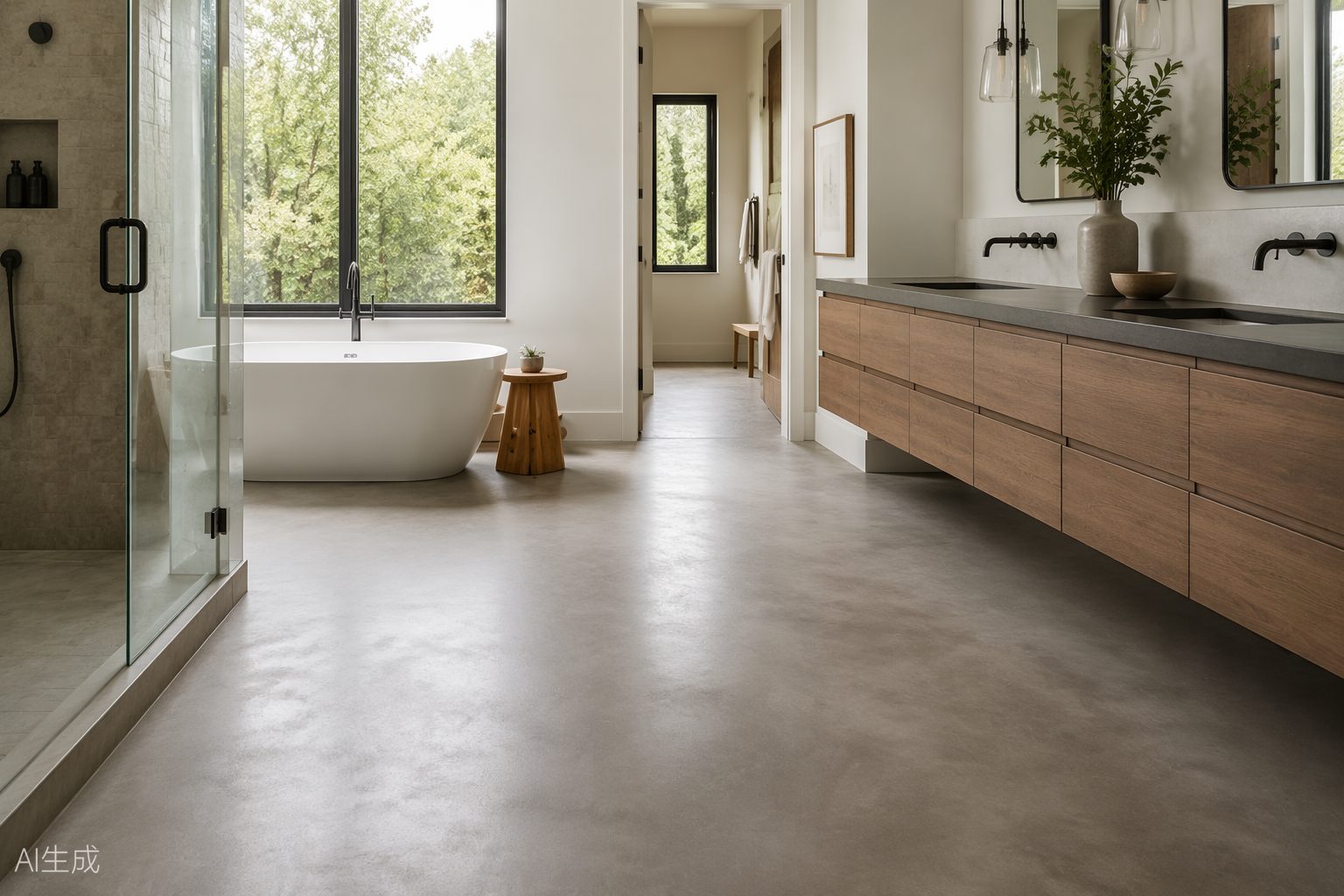
A microtopping or self-leveling cement product is applied over the existing tile in thin layers, filling grout lines and creating a continuous surface, then sealed. Done well, it delivers the seamless modern look people want from it.
The Honest Pros
The aesthetic is genuinely distinct: seamless, matte, architectural. It hides grout lines completely. It avoids tile demolition, like refinishing does. And for large open areas where that industrial look fits the design, nothing else reads quite the same way.
The Cons the Photos Skip
Overlays add height, which changes transitions at doorways, appliances, and adjoining rooms. They depend entirely on the tile below staying put: movement or hollow tiles telegraph through as cracks, and grout lines can ghost through thin applications over time. Repairs are difficult to blend. And removing a failed overlay later means grinding concrete off tile, which is the demolition you were avoiding, plus one more layer.
How Tile Refinishing Compares
Our ceramic floor tile refinishing keeps the floor you have and renews its surface: color changed, grout lines sealed under the finish, height and transitions untouched, and a repair path that exists if life happens to the floor later. The finish cures for 24 hours after the final coat and the room is back in service. It will not give you the poured-concrete look; it will give you a floor that looks like excellent tile again.
Cost Structure, Compared Honestly
An overlay’s price is built from surface preparation, multiple applied layers, sealing, and the installer’s risk pricing for the unknowns underneath, and quality varies enormously between crews who specialize in it and crews who watched a video. Replacement’s price is demolition plus disposal plus substrate work plus new tile plus setting plus grouting, spread across trades. Refinishing collapses into one visit and one invoice. We publish no prices because every floor is quoted individually, but the structural difference in where the money goes is exactly that, and it explains most of what you will see in competing bids.
Manufacturer guidance published for overlay systems puts the numbers in useful perspective. A microcement overlay builds in multiple thin coats to a total system of about 2 to 3 millimeters, often over an epoxy mortar base, and installers specify roughly four days before the floor is dry to the touch and a full seven days of cure before it is walked on. Tile refinishing puts the same floor back in service after a 24 hour cure. Neither timeline is a flaw; they are different chemistries doing different jobs. But a household choosing between the two should plan around a week without the room for an overlay, and a day or two for refinishing.
Durability and Maintenance, Compared
Sealed overlays need their sealer maintained on a schedule, and wear shows first where the sealer thins; skipped maintenance is how the seamless look becomes the stained look. A refinished tile floor asks only for non-abrasive cleaning and common sense. Both live or die on installation quality; neither survives a failing substrate, which is why the assessment matters more than the material.
One maintenance difference rarely makes the overlay brochures: sealing. Overlay installers note that microcement is porous without its sealer, and in wet rooms the specialist waterproof sealer needs reapplying on roughly a two to three year cycle to keep protection intact. A refinished tile floor carries no reapplication schedule; its maintenance is non abrasive cleaning and nothing else. If the room is a bathroom or laundry, that recurring appointment belongs in the comparison alongside the install price.
The Installation Reality
Overlays involve their own multi-day sequence of layers and cure stages, plus grinding dust if preparation is done right. Refinishing is one work window under our method with a 24 hour cure after the final coat. Ask any overlay installer for their honest total timeline including cures, then compare like with like.
What the Overlay Look Asks of the Room
The seamless concrete aesthetic is a commitment, not a neutral: it sets an industrial, minimal tone that the cabinets, fixtures, and trim around it either support or fight. Renewed tile is the quieter choice that serves any style already in the room. Neither answer is wrong; one of them matches the house you actually have, and it is worth deciding which before falling for photographs of other people’s rooms.
A Note on Warranties and Accountability
Whichever path you choose, insist on knowing exactly who stands behind the surface in year two and what that promise covers in writing, because the difference between installers shows up after the invoice clears, not before.
Our Bias, Stated Plainly
We refinish tile for a living, so read our comparison knowing that. It is also exactly why we can afford to be honest: a homeowner steered into the wrong surface blames the company that steered them, and we would rather lose the overlay jobs than own those outcomes. When an overlay or a replacement genuinely fits better, we say so at the assessment, and this page is the same answer in writing.
Questions to Ask Any Installer
Whoever you hire for whichever path: how will you test the existing tile’s bond before covering it? What happens at doorway transitions when the floor gains height? What does a repair look like in year three, and can you show me one? Can I speak to a customer from more than a year ago? Installers with good answers exist in every trade, and the questions cost nothing.
customer reviews and completed project gallery
Which Should You Choose?
Choose the overlay if the seamless concrete aesthetic is the point of the project and your tile floor is exceptionally stable. Choose refinishing if your goal is a floor that looks new, keeps its height and transitions, and costs and disrupts less. Choose replacement if the substrate is failing, because neither an overlay nor a coating fixes movement. If you are not sure which describes your floor, send a photo through our quote page or call (818) 858-1150 and we will tell you which of the three we would pick in your house, even when the answer is not us. The tile refinishing pillar covers the full service if refinishing wins.