
Most bathroom and kitchen sinks in Los Angeles homes can be reglazed: porcelain-enameled cast iron, enameled steel, and vitreous china all take a new coating system beautifully, while stainless steel, solid stone, and rusted-through metal route honestly elsewhere. This is the materials map, with self-checks for reading your own sink and the disqualifiers stated plainly, because a renewal that starts on the wrong substrate fails no matter how well it is applied.
Why Material Decides Everything
Reglazing is a coating system bonded to a prepared surface, so the question under every sink is what the surface is and what condition it holds. The same craft that renews a cast iron farmhouse sink has nothing to offer bare stainless steel, and knowing the difference before the visit is what this page is for. When in doubt, the photos decide in a minute.
Porcelain-Enameled Cast Iron: The Best Candidate in the House
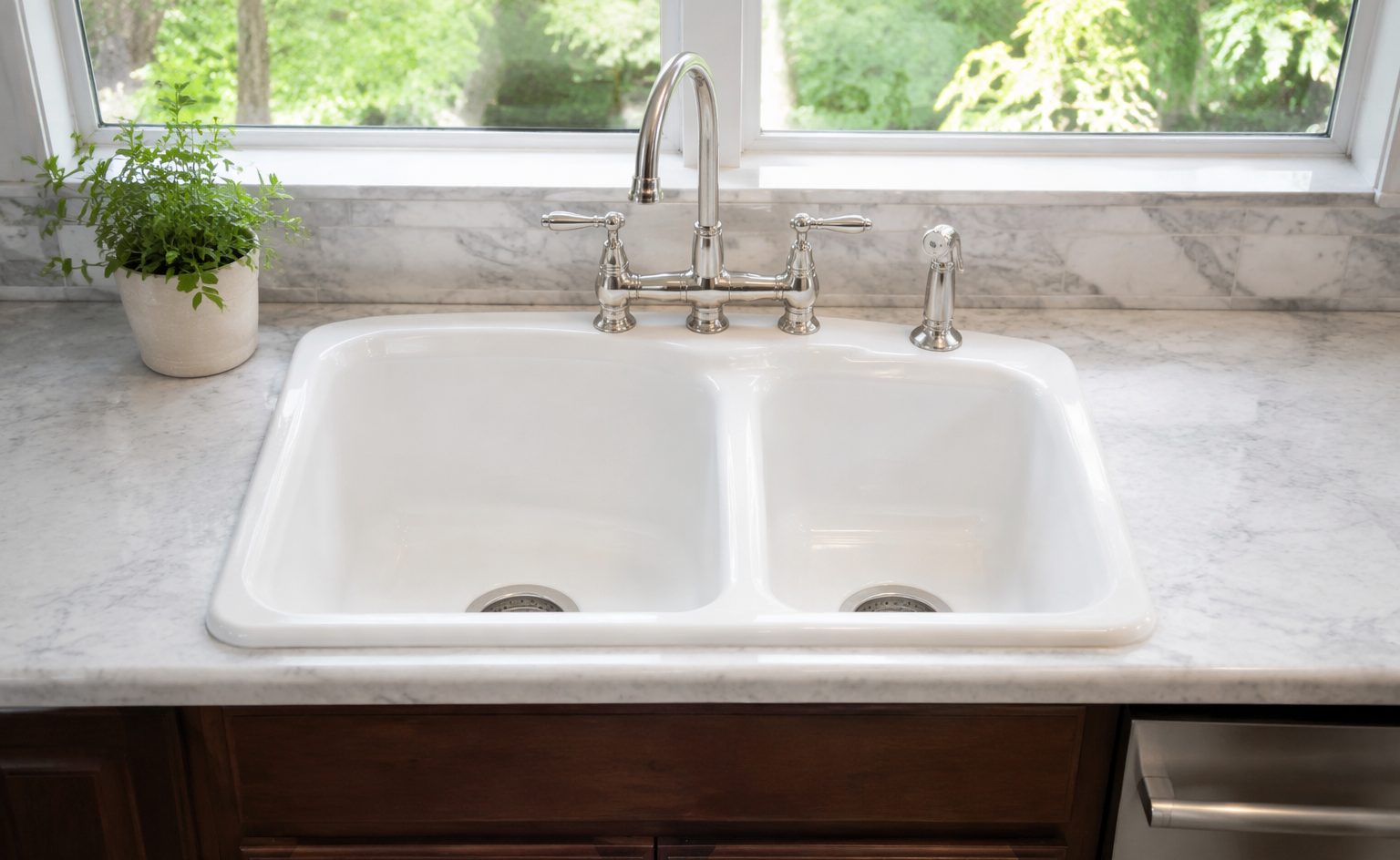
The classic heavy sink, kitchen farmhouse fronts, vintage bathroom basins, wears a glass-like porcelain enamel over cast iron, and it is reglazing’s home ground: rigid, stable, heavy enough that nothing flexes, with decades of service left in the iron long after the enamel dulls or chips. Older Los Angeles homes are full of these, and renewing one preserves a fixture whose modern replacement is a genuine expense. The vintage-preservation case runs parallel to tubs, told at reglazing the original tub in an old house.
Enameled Steel: The Lighter Sibling
Stamped steel under porcelain enamel, common in mid-century kitchens and baths, reglazes well when the steel is sound. Its thinner body chips easier than cast iron, which is usually why it needs renewal in the first place, and chip repair is part of the standard process walked at how sink reglazing works.
Vitreous China: The Bathroom Standard
Most bathroom basins, pedestals, and wall-hung sinks are vitreous china, a fired ceramic that takes renewal well when intact. Its one rule: cracks that pass through the china are structural, not cosmetic, and route to the triage at fixing a chipped, cracked, or rusted sink before any coating conversation.
Cultured Marble Basins: One Surface, One Renewal
Integrated vanity tops cast sink and counter as a single cultured marble piece, and they refinish as that single piece, never basin-only. Their full story lives at cultured marble countertop and vanity refinishing; the separate bathroom basin’s story is at bathroom vanity sink reglazing.
What Routes Elsewhere, Said Plainly
- Stainless steel: bare metal by design, no enamel to renew; it is cleaned or replaced, not coated
- Solid stone and composite vessels: stone care belongs to stone restorers, and we say so
- Rusted-through metal: once corrosion has eaten through, the structure is gone and coating cannot give it back
- Plastic laundry tubs: assessed case by case, and photos answer honestly
Turning work away on the wrong substrate is not caution for its own sake; it is why the work we accept carries a written warranty we expect to honor.
Two Self-Checks You Can Run Tonight
The magnet test sorts the metals: a kitchen magnet grips enameled cast iron and enameled steel and ignores vitreous china, so a heavy white sink that holds a magnet is enamel over metal. The tap test sorts the weights: cast iron answers a knuckle with a dead solid note, steel rings lighter, china sits between. Neither test replaces photos; both make your quote message sharper.
Condition Rules That Outrank Material
The right material in the wrong condition still routes to triage first: rust blooming from the drain ring, chips that expose spreading corrosion, a basin loose in its counter mounting, and any crack that weeps water. Most of these repair as part of the renewal; the honest exceptions are named in the triage post, and photos sort them before anyone drives anywhere.
The Cast Iron Kitchen Question
The most common what-can-be-reglazed message we receive is the cast iron kitchen sink, usually a farmhouse front the household loves under a finish the decades have beaten. The answer is yes, emphatically: it is the best candidate in the house, its renewal runs the standard process with the kitchen protected, and the full kitchen story lives at kitchen sink reglazing.
Age Is Not a Disqualifier
The materials map above says nothing about age on purpose, because age is not a condition. A 1928 cast iron basin with intact enamel is a better renewal candidate than a 2019 builder-grade sink with a failed coating on it, and the older Los Angeles housing stock this company works in proves it weekly. Original fixtures carry mass, depth, and casting quality that modern replacements imitate only at boutique prices, and their wear is almost always surface wear, which is exactly the jurisdiction of reglazing.
The preservation case is argued at length for tubs at Your specialists, and every sentence of it applies at sink scale. When a house has kept its original sink for ninety years, the surface is the only thing that aged, and the renewal keeps the fixture while retiring the wear.
Previous Coatings: The Material You Added
One more material belongs on the map, because it changes the project: a previous coating. A refinished sink, whether done by a professional years ago or a weekend kit last spring, presents the new crew with someone else’s chemistry, and the rule is absolute: the old coating strips completely before anything new is applied. Coating over a coating stacks the new finish on the old one’s bond, and the whole tower fails at its weakest layer.
This is why a failed kit makes a sink cost more than it would have fresh, and why honest quotes ask whether the surface has been refinished before. The bond chemistry behind every peeling story is explained at why reglazed surfaces peel, and it reads identically at sink scale: preparation is the finish’s entire foundation, and a hidden old coating is the preparation problem that must be solved first.
Two Sinks, One Household, One Visit
The materials map usually gets read for one sink at a time, but most households own several, and they rarely age in isolation. The cast iron kitchen sink and the vitreous china vanity basin were installed in the same year, cleaned with the same products, and fed by the same hard Los Angeles water, so when one is ready for renewal the others are usually within sight of it. Reading the whole house against the map takes five minutes and often changes the shape of the project.
The practical payoff is the shared visit: sinks renewed in the same appointment share mobilization, masking logistics, and one 48 hour cure window, which is why multi-fixture projects quote below the sum of their parts. Photograph every basin that looks tired, note the material of each as best you can, and let the reply sort them into the map. The magnet test above takes seconds per sink, and a household that runs it room by room usually arrives at the quote conversation already knowing its own inventory.
Can You Reglaze a Stainless Steel Sink?
Stainless steel is not a reglazing candidate, and we will tell you so rather than take the job. Reglazing bonds to porcelain, cast iron, cultured marble, and similar hard surfaces. A stainless basin is better served by professional polishing, or by replacement if it is dented or worn through.
This comes up often enough to be worth stating plainly, because a coating applied to stainless has very little to grip and tends to fail early and visibly. If your kitchen has a stainless sink you dislike, the honest paths are polishing to restore the finish, or replacing the basin, which on a drop-in sink is a far smaller project than people expect. If the counter around it is tired too, that surface often is a refinishing candidate even when the sink is not.
From Material to Quote
To see our completed projects and verified customer reviews, read verified Can Los Reglazed Sinks Angeles customer reviews and testimonials.
Photograph the sink from above and one wider room shot, run the magnet if you are curious, and send both through our free quote page or call (818) 858-1150. The reply names the material, confirms the candidacy, and prices the renewal, or routes you honestly if the surface is not ours to renew; the whole service lives at sink reglazing.