
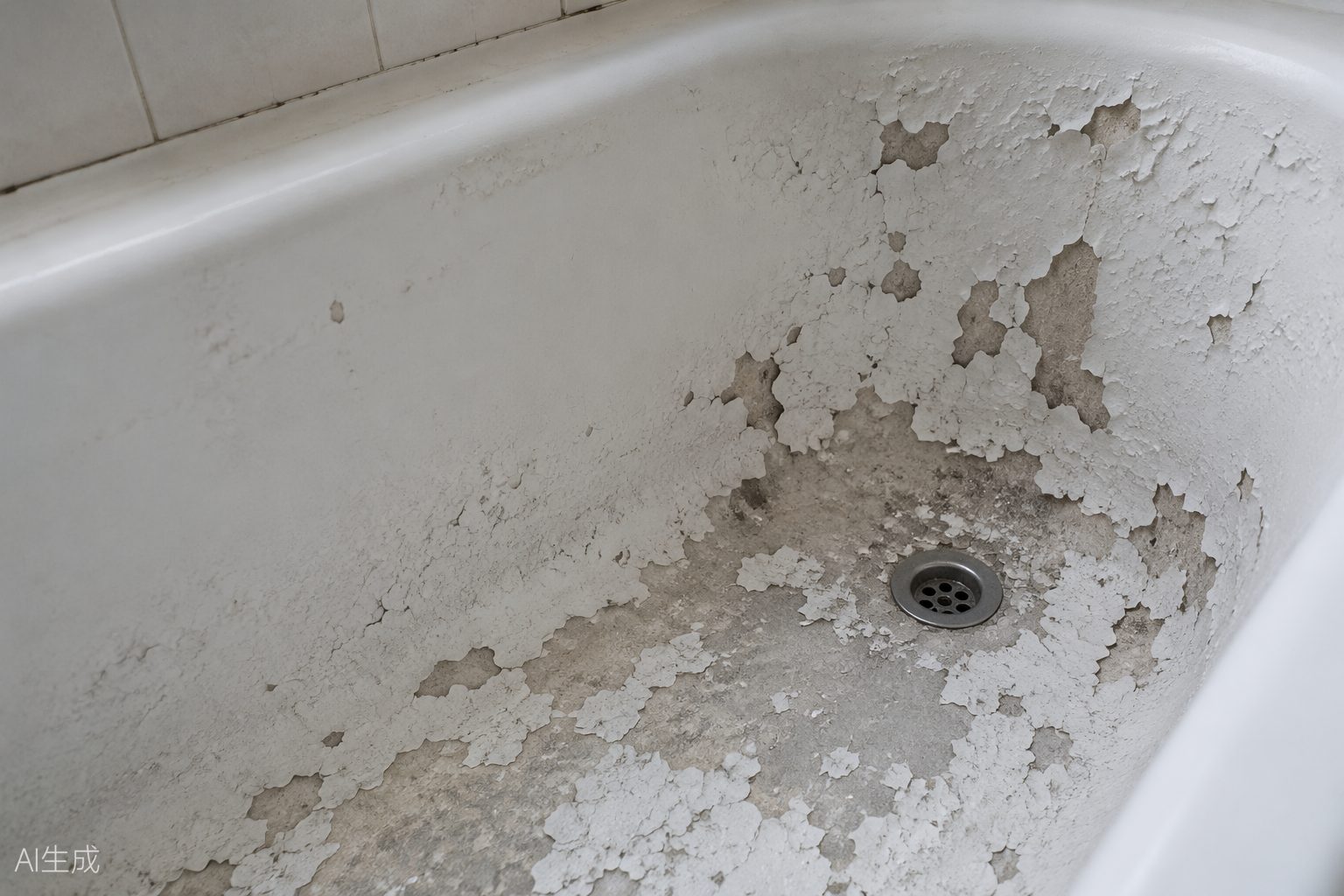
Reglazed tubs peel for one dominant reason: the coating never truly bonded, because the preparation underneath it was skipped, rushed, or done with the wrong chemistry. Peeling is almost never a mystery and almost never bad luck; it is a preparation failure showing itself on a delay. This post walks every real cause, how to read which one you are looking at, and what an honest fix involves.
JLF Tub & Tile Reglazing Site Map
The Bond Is the Whole Product
A reglazed finish is only as strong as its grip on the surface below. That grip is built in the invisible steps: industrial degreasing, mechanical etching, repairs completed before coating. When those steps are done fully, the coating and the tub behave as one surface for a decade. When any one is shorted, the finish is a sticker, and stickers peel.
The Real Causes, Ranked by How Often We See Them
- Residue left behind: soap film, body oils, or silicone the cleaning never removed
- No etch or a light etch: the old glossy surface gave the coating nothing to key into
- Coating over damage: chips, rust, or a failing old coating sealed under the new one
- Kit chemistry: retail coatings that were never built for daily hot water
- A rushed cure: water or weight in the tub before the finish finished hardening
- Standing abuse afterward: a dripping faucet or a permanently wet mat working one spot
The first three belong to the installer, the fourth to the product, and the last two to the tub’s life after the crew left. Most peeling stories are the first three wearing different costumes.
Why the Drain Peels First
The drain area concentrates every stress at once: the last standing water after every bath, the most cleaning attention, the most heat cycling, and, on older tubs, the most likely hidden rust. A bond that is marginal everywhere fails there first, which is why a small lifted edge at the drain is usually the announcement and not the extent of the problem.
Reading the Peel You Have
Sheets lifting cleanly with the old gloss visible underneath say the bond never formed: preparation failure. Bubbling or lifting around a rust bloom says damage was coated over. Yellowed, brittle flakes say kit chemistry aging out. Edges lifting at the caulk line after years of good service say a finish reaching the natural end of an honest life. Photograph what you see; the pattern usually names the cause.
The Kit Story, Specifically
Weekend kits fail on a schedule because they skip everything that creates the bond: no industrial degrease, no mechanical etch, no repair stage, and a coating formulated to be safe for amateur application rather than durable in service. Peeling in year one or two is the signature. It is also fixable, but only by removal, which is why the redo costs more than the job would have originally.
Can a Peeling Tub Be Reglazed Again?
Yes, and the sequence is the fix: the failed coating is stripped completely off, never patched or coated over, the surface underneath is repaired where the failure exposed damage, and the full preparation runs as if the tub had never been coated. A redo done that way lasts like a first-time job done right. A redo that recoats over the failure buys a countdown, and we decline to sell countdowns.
How the Cure Fits In
Under our 24-Hour Spa Shell Transformation Method the transformation completes inside a 24 hour work window, and the finish then cures for 24 hours after the final coat. That second number is where some peeling stories begin: a bath on night one interrupts hardening chemistry that never recovers. It is also the easiest failure to prevent, because it costs nothing but a day of patience.
The Silicone Problem Nobody Mentions
Silicone is the quiet saboteur of the trade: residue from old caulk, certain cleaners, and shine products spreads invisibly and repels coatings on contact. Ordinary cleaning does not remove it; only deliberate chemical preparation does. A crew that does not treat for silicone can do everything else right and still deliver a finish with fisheyes and weak zones, which is one more reason preparation questions predict outcomes better than photos of finished work.
Peeling, Chipping, and Crazing Are Three Different Stories
Peeling is the bond releasing in sheets or lifted edges: preparation. Chipping is impact damage, a dropped showerhead or tool, local and repairable on an otherwise healthy finish. Crazing is a web of fine surface cracks, usually an aging or kit coating shrinking as it hardens past its design. Naming which one you have changes the fix from strip-and-redo to a spot repair, and photos settle it quickly.
Choosing a Company That Will Not Peel On You
The questions that predict longevity are all preparation questions: how do you clean and etch, what do you repair first, what happens if you find more damage once work starts, and how long exactly from final coat to first bath. Specialists answer casually. The fuller vetting method lives at how to choose the right bathroom renovation company, and the trade landscape behind it at who refinishes bathtubs.
Protecting a Finish That Was Done Right
A properly bonded finish asks little, but the little matters: non-abrasive cleaners only, drips fixed before they work one spot, nothing left suctioned or permanently wet on the surface. The complete routine, including the first-week rules, is at bathtub reglazing aftercare, and how many honest renewals a tub can take across its life is covered at how many times can you reglaze a tub.
Why Coating Over a Failure Never Holds
The tempting shortcut, recoating over a peeling finish, fails on simple mechanics: the new coating bonds to the old one, and the old one is actively letting go of the tub. Whatever is applied on top inherits the weakest bond in the stack, so the redo peels on the old failure’s schedule with a thicker edge. This is why strip-first is not an upsell; it is the only version of the fix that is a fix.
The Warranty Question, Asked the Right Way
Peeling is exactly what written warranty terms exist for, so ask every company what their warranty covers, for how long, and in writing before work starts. The answer’s precision predicts the finish: companies confident in their preparation put specifics on paper, and companies vague about coverage are pricing in the failures their process produces. Keep the document with your care instructions; a decade is long enough to need the paper.
How Long Should a Finish Actually Last?
A professionally prepared and coated tub, cared for with the gentle routine, is a decade-scale surface, often longer in low-use bathrooms. Hold every peeling story against that baseline: failure in year one or two is a process story, not a product limitation, and the difference between the two is everything this post walks.
If Yours Is Peeling Now
Photograph the lifted area up close and the whole tub from the doorway, and send both through our free quote page or call (818) 858-1150. The reply names the likely cause and the honest fix, including stripping if a failed coating is present, and the quote prices the redo done right rather than a patch that repeats the story.