
A professionally refinished tile surface, kept with ordinary care, holds its finish for years rather than seasons, and the honest variable in that sentence is not the coating. It is the wall it went onto, the preparation that came before it, and the way the room gets used and cleaned afterward. Anyone who answers this question with a single confident number is guessing at three things they cannot see.
Here is the honest version, without an invented lifespan attached to it.
What Actually Determines the Answer
- Preparation. The single biggest factor, and it happened before the first coat. Bond built on a properly cleaned, repaired, and etched surface behaves completely differently from bond built on a rushed one.
- Where the surface lives. A backsplash behind a counter leads a gentle life. A shower wall gets hot water, soap, and daily humidity. A shower floor takes all of that plus foot traffic.
- What it gets cleaned with. Non-abrasive products and soft tools preserve a finish. Scouring pads, abrasive powders, and harsh acidic cleaners wear it, and they do it invisibly for a while.
- How well the room dries. A bathroom with a working fan and an open door after showers is a kinder environment than one that stays damp for hours.
- What was underneath. Sound tile on a dry wall is the baseline this whole article assumes.
The Wear Map: Not All of a Wall Ages Alike
Refinished surfaces do not fail all at once like a light bulb. They wear in the places that get used, which is why the honest answer is a map rather than a number. Kitchen backsplashes typically look new the longest, because they take heat and splatter but very little abrasion. Bathroom walls above the tub sit in the middle. The band around the shower valve and the area where soap and shampoo bottles get set down and dragged sees more than the wall beside it. If anything shows its age first, it is usually one of those small high-traffic zones, and that is a touch-up conversation, not a redo.
What Shortens a Finish
Three habits do most of the damage. Cleaning with abrasive pads or powders, which polishes away the surface a little at a time. Reaching for aggressive acidic or bleach-heavy products on a schedule, which attacks the finish chemistry rather than the soap film sitting on it. And letting the room stay wet, which keeps every surface in the room working harder than it needs to. A fourth one is worth naming because it surprises people: heavy suction cup mats left in place, which can grip a finish hard enough to matter in the early weeks.
What Stretches It
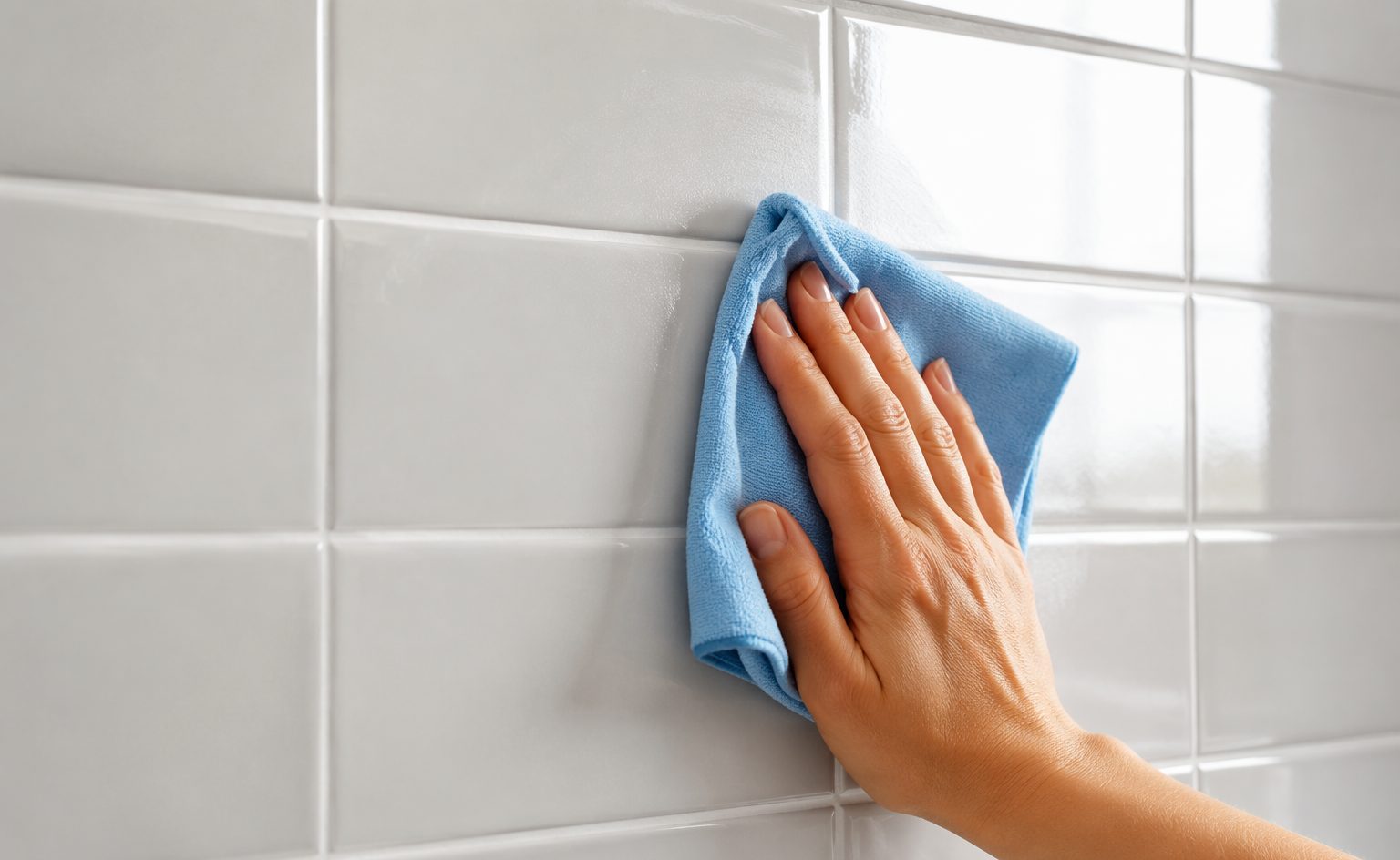
The regimen is short enough to say in one breath. Give the finish its full 24 hour cure before the surface returns to service. Clean with non-abrasive products and a soft cloth or sponge. Run the fan and let the room dry between uses. Wipe the shower walls down when it is convenient, which takes seconds on a sealed surface because the soap film has no grout canyons left to grip. That is the entire care routine, and it is the same care any good surface deserves.
Ordinary Aging or Actual Failure?
Knowing the difference saves a lot of worry. Ordinary aging looks like a gradual loss of gloss in the zones you use most, or a faint dulling that you notice in raking light and your guests never do. Actual failure looks different and behaves differently: lifting or bubbling at an edge, a section releasing in a sheet, or a patch that returns after cleaning because the surface underneath has changed. Gradual and even is aging. Sudden and local is a bond problem, and bond problems trace back to preparation, which is the argument for choosing the crew rather than the price. The chemistry behind that is explained at why reglazed surfaces peel, and it reads the same for tile.
What Happens at the End of a Finish’s Life
This is the quietly good news. A refinished surface that has genuinely worn out is a candidate for refinishing again, because nothing was removed the first time and the tile underneath is still the tile underneath. The renewal is repeatable in a way that a retile is not, which is part of why the decision to refinish keeps future options open rather than closing them. The full comparison lives at refinish vs retile.
The Comparison That Matters More Than the Number
People asking this question are usually holding it against replacement, so here is the fair frame. New tile does not come with an unlimited lifespan either. It comes with grout, and grout begins absorbing water, soap, and minerals from the first shower, which is why a retiled bathroom looks dated at the grout lines within a few years while the tile itself stays perfect. Both paths age. One of them asks for demolition, a waterproofing rebuild, and a construction week to get there, and the other asks for one visit. Judging refinishing against an imaginary permanent surface is the mistake; judging it against the real alternative is the decision.
What the Warranty Covers
Every JLF job ships with a written warranty, and the terms arrive with your job paperwork rather than living in a sales conversation. That is deliberate: a company willing to put its terms in writing is telling you what it actually believes about its own work. If a finish ever does something it should not, the call is to us at (818) 858-1150, and that is exactly what the warranty exists for.
Two Numbers Worth Knowing Instead
Since a lifespan figure would be invented, here are two figures that are not. The finish cures for 24 hours after the final coat, and that window is fixed by chemistry rather than by scheduling preference. And more than 580 Google reviews at a 4.9 rating describe how the work has actually held up for the households and operators who bought it, which is a better evidence base than any number a salesperson could quote you. Read them yourself at testimonials, and see finished surfaces at before and after.
The Honest Summary
Refinished tile lasts a long time when the preparation was right and the care is ordinary, and it lasts a short time when either of those was skipped. We would rather tell you that than name a number we cannot stand behind. If you want to see how the preparation is actually done, it is walked step by step at how tile refinishing works, and the whole service is at ceramic tile refinishing.
Touch-Ups and Mid-Life Care
A finish that is aging in one zone rather than failing across a wall is often a touch-up rather than a project. High-contact bands around a valve, or the spot where bottles get dragged across a ledge, can be addressed without redoing the surround, and catching that early is far cheaper than waiting until the wear spreads. The practical trigger is simple: when you start noticing a dull patch in ordinary light rather than only in raking light, it is worth a photo and a question.
Ask About Your Own Tile
Send a photo of the wall straight on and one close on the grout through our free quote page or call (818) 858-1150, and you will get a reading of what your surface is likely to give you. JLF Tub & Tile Reglazing serves residential and commercial properties throughout the Los Angeles metropolitan area and Simi Valley, California, and has since 2016.