
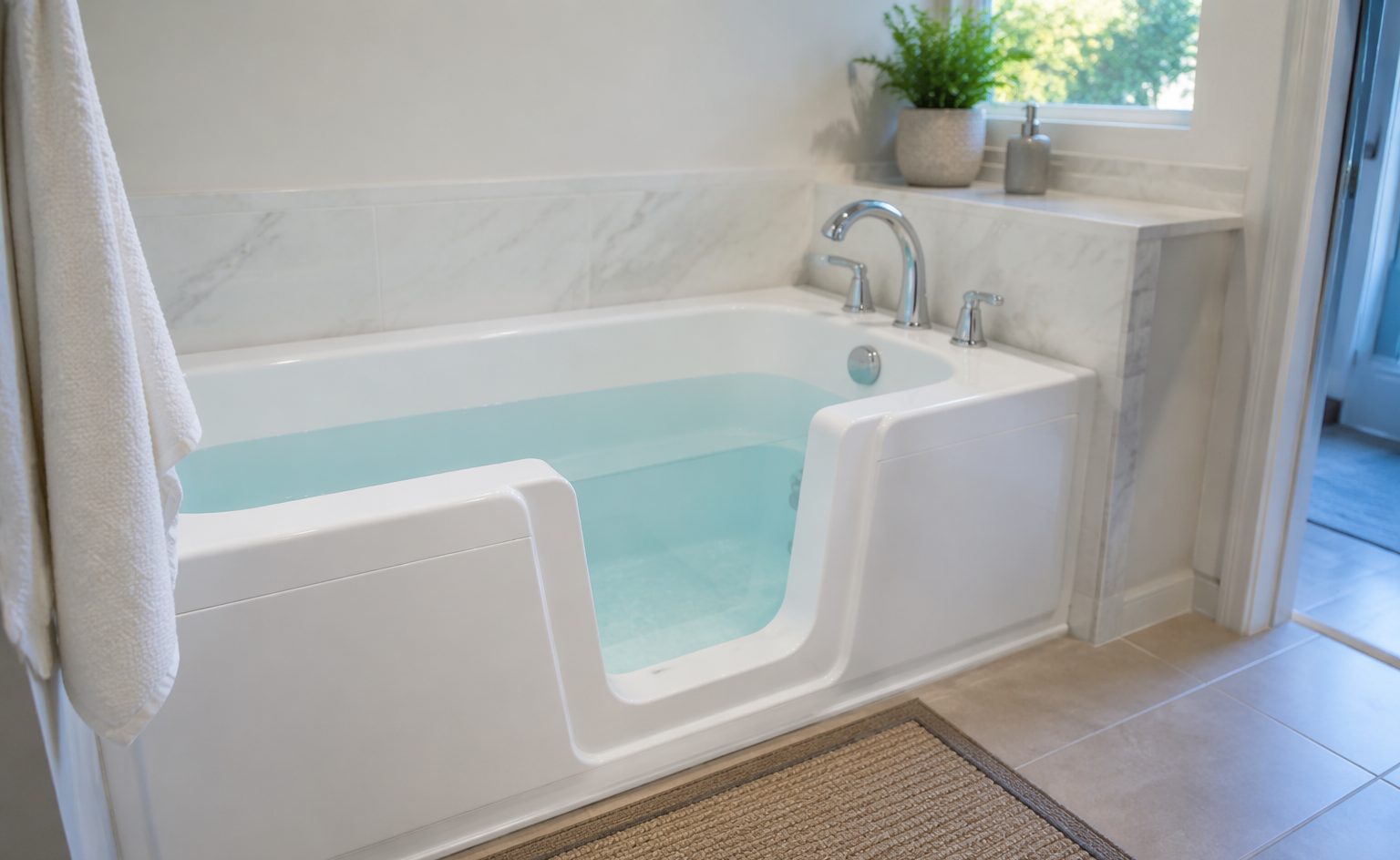
Yes, you can still take baths after a tub conversion, if you choose the conversion style built for it: the step conversion keeps the tub a tub, and depending on the configuration chosen for your household, the entry can be designed so the basin still holds water for bathing. The honest answer has real nuance, because the conversion family includes styles with different bathing outcomes, and choosing correctly up front is the entire game. This post walks the truth, style by style.
Why the Question Deserves a Careful Answer
The conversion exists to remove a barrier, and a bath is not a barrier; for many people it is the point of the bathroom. A household that loves baths should not lose them to an entry fix, and a household that never bathes should not pay to preserve an option nobody uses. The question sorts every household into its right conversion, which is why we ask it before recommending anything.
The Step Conversion and Bathing
The step conversion cuts the wall and installs a custom form-fitted step, and its bathing outcome depends on the configuration: entries can be designed to preserve the basin’s ability to hold water, with the specifics, height, sealing approach, and how filling and draining work day to day, settled at the quote for your tub and your household. What the style always preserves is the tub itself, which is why bath-loving households start here; the full picture of the style is at step-in tub conversion.
The Shower Conversion and Bathing
The fuller shower conversion opens the entry low, and that choice is honest about its trade: the space becomes a step-in shower, and soaking baths are what it gives up. Households choose it precisely because bathing left their routine years ago, and for them the trade is no trade at all. The style is walked at converting a tub to a step-in shower.
The Household Test
- Someone bathes weekly or wants to: start from the step conversion and say so at the quote
- Nobody has bathed in years and the climb is the enemy: the shower conversion converts the room to how it is used
- The household is split or unsure: say that too, and let the configuration conversation earn its keep
There is no wrong answer, only a wrong match, and the match is decided by how your household actually lives, not by which conversion is larger.
Grandchildren, Guests, and the Occasional Bath
The bath question often arrives wearing someone else’s name: the grandchild’s bath night, the guest who soaks, the future buyer who might want a tub. Those are real considerations and they point the same direction, toward the step conversion’s tub-preserving logic, and they are worth saying out loud at the quote so the configuration reflects them.
What Never Changes, Either Way
Both styles keep the tub plumbed, the surround intact, and the bathroom’s footprint untouched, both complete within the same 48 hour window, and both can carry the same pairings: the surface reglazed in the same project, covered at step-in conversion and reglazing together, and a slip-resistant floor texture, covered at non-slip bathtub coating. The bathing question chooses between styles; it does not change the craft.
Care After the Conversion
A converted tub, bathed in or showered in, follows the same gentle routine as any renewed surface: non-abrasive cleaners, prompt attention to drips, and a rinse habit that keeps seams clean. Where the project included refinishing, the complete routine is at bathtub reglazing aftercare, and the sealed entry asks nothing extra beyond ordinary sense.
The Configuration Conversation, Demystified
When a household wants entry relief and bathing both, the quote conversation earns its keep: the entry’s height and position, how the opening is sealed, and how filling and draining work in daily practice are settled against your tub’s geometry and who uses it. None of it is exotic and all of it is decided before anything is cut, which is why the finished entry fits the household instead of the household adapting to it.
What We Will Not Promise
Honesty has edges worth stating: we will not promise that every tub and every configuration preserves every bathing habit unchanged, because tubs, households, and needs differ, and the truthful answer comes from your photos and your quote, not a blog’s generalization. What we will promise is the standard behind every configuration, a sealed, solid, finished entry built to be used daily, and a recommendation made for how you live rather than for the larger invoice.
Resale, Since Someone Will Ask
A tub-preserving conversion keeps the listing conversation simple: the bathroom still has its tub, now with a sensible entry, and nothing about the room reads as specialized equipment. Buyers see a bathroom someone made easier to live in, which is a feature in a city where every buyer knows someone who needed exactly this.
Asking the Question Early Beats Retrofitting the Answer
The least satisfying path is converting twice: choosing the shower version, then missing baths, or preserving bathing nobody uses while the step height still fights a knee that needed more relief. One honest household conversation before the quote, who bathes, who struggles, who visits, prevents both, and it is the single highest-value five minutes in the entire project.
How the Answer Shows Up in Daily Life
Matched correctly, the conversion disappears into routine within a week: the bather still bathes, the shower-first household stops negotiating a wall, and the bathroom stops being a topic. That disappearance is the success condition, and it is worth naming because it is the opposite of what people fear when they hear the word conversion; the goal was never a different bathroom, only an easier one.
Renters and Adult Children, Two More Voices
Two other parties often hold this question: renters asking a landlord for entry relief, where the tub-preserving step style is the answer that protects the unit’s future flexibility, and adult children arranging a parent’s bathroom from another city, where the honest configuration conversation matters double because the daily user is not the one on the phone. Both situations work routinely, and both go better when the bathing question is answered by the person who actually bathes.
Trying It Before Deciding, Sort Of
Households torn on the trade can rehearse it: live shower-only for a month with the tub you have, and notice whether anyone misses the bath. The experiment costs nothing, answers the question with evidence instead of prediction, and hands the quote conversation a household that already knows how it lives, which is the best possible customer to be.
The Short Version
Bathing survives the conversion when the conversion is chosen for it: the step style preserves the tub and can be configured for baths, the shower style trades baths away on purpose, and the household that answers the bathing question honestly gets the bathroom it actually wanted. Everything else is configuration detail, settled from photos at the quote.
customer reviews and completed project gallery
Answering It for Your Bathroom
Send two photos, the whole tub and the entry wall, through our free quote page or call (818) 858-1150, and answer one question honestly: does anyone bathe. The reply recommends the style and configuration that keeps what your household uses and removes only what harms it, with the whole service laid out at senior access conversions.