
Yes, you can change your bathtub’s color, and reglazing is how it is done: the coating that renews the surface is the color, so a color change costs a decision, not a demolition. Dated almond becomes clean white, a pink-era tub joins this decade, or a plain tub takes on a deliberate tone, all in the same one-visit renewal. This post covers how it works, what the honest options are, and how to choose a color you will still like in year eight.
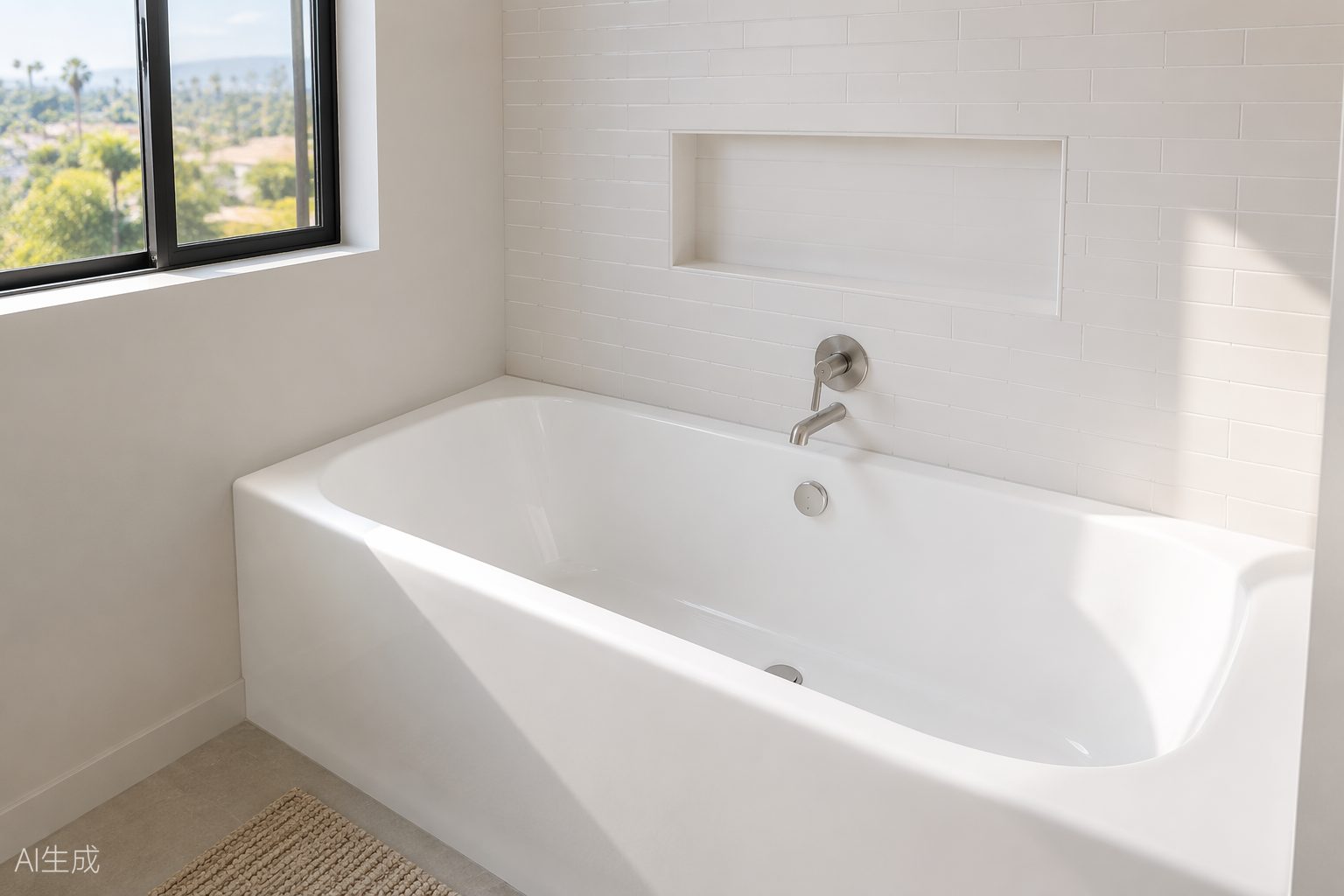
Why the Color Is Free to Change
Reglazing builds a new surface over the prepared old one, and that surface arrives in whatever color the coating is mixed to. Nothing extra is demolished, swapped, or installed; the same masking, preparation, repairs, etching, and controlled coats that renew a white tub renew an almond one to white. The full craft is walked at how bathtub reglazing works, and the color decision simply rides the coating stage.
The Colors Los Angeles Actually Retires
The requests tell the story of the housing stock: avocado and harvest tones from the seventies, almond and bone from the eighties builds, pink and seafoam from the mid-century bathrooms, and the occasional bold choice a previous owner loved alone. Every one of them exits the same way, and the most common destination by far is a clean standard white, because white photographs well, matches everything, and never dates.
The Three Honest Options
- Standard white: the baseline choice, timeless and listing-safe
- Color matching: the finish mixed to sit alongside existing fixtures you are keeping
- A deliberate change: a chosen tone that makes the tub the room’s decision
The choice is made at the quote, stated in the paperwork, and applied on work day. What it is not is a separate service: the color conversation is part of the same project, and it is one of the factors named up front in bathtub reglazing cost in Los Angeles.
Matching the Rest of the Bathroom
The color question rarely stops at the tub, because the tub sits inside a set: the tile surround, the sink, sometimes a counter. Changing the tub alone can strand the rest of the room in the old palette, which is why whole-set renewals are the standard play for a color change, every surface leaving the old era together in one visit. The alcove version of that logic lives at shower and tub combo reglazing.
Vintage Tubs and Period Color
Old-house owners face the color question with more history in the room: a clawfoot or original cast iron tub can keep a period-correct tone where the bathroom celebrates its decade, or retire it where the palette was the era’s one mistake. Both are legitimate, both are the same work, and the preservation case for the tub itself, whatever its color, is made at reglazing the original tub in your old Los Angeles house.
Choosing a Color You Will Not Regret
The finish is a decade-scale surface, so choose on a decade’s terms: white and soft neutrals age invisibly; strong tones should be the room’s deliberate design decision, not a mood. Two practical tests help, whether the color works with the floor and tile that are staying, and whether it would work in a listing photo, since every bathroom eventually stars in one. When in doubt, white is the answer that has never once been regretted in our gallery.
What a Color Change Looks Like Done
A uniform, glossy surface in the new color, edge to edge, with no ghost of the old tone at the drain or rim, because the old color is under the new surface, not showing through it. The before and after gallery carries the dramatic versions, and dated-color tubs are some of the most satisfying transformations in it; the room changes age in one day.
Durability Is Color-Blind
A color-changed finish is the same finish: the same preparation underneath it, the same cure after it, the same decade ahead of it, and the same gentle routine protecting it, non-abrasive cleaners, prompt drip repairs, nothing gritty. The complete care story is at bathtub reglazing aftercare, and it reads identically whatever color the tub wears.
Sellers, Listings, and the White Answer
Pre-listing color changes are their own steady lane: a dated-color bathroom reads as a renovation project on the buyer’s mental invoice, and a white tub deletes the line item. Agents send us avocado and pink bathrooms the week before photos for exactly this reason, and the decision math is laid out at is it worth it to refinish a bathtub.
Function Can Change Along With Color
The renewal visit is also the natural moment to build function into the finish: a slip-resistant texture on the basin floor, applied as part of the coating work rather than fought over with suction mats afterward. That option has its own page at non-slip bathtub coating, and pairing it with a color change means the tub leaves its old era in looks and behavior at once.
If You Change Your Mind Later
The honest answer about permanence: the color lasts as long as the finish, and the next renewal, years from now, is the next chance to choose again. That is exactly enough commitment to make the choice worth ten minutes of thought and nowhere near enough to make it frightening.
How the Change Handles Edges and Undersides
Good color work is defined at its boundaries: the rim where tub meets tile, the seam the caulk will seal, and, on a clawfoot, the exterior that can carry its own finish as a design statement. A professional change treats every visible surface deliberately so the new color ends where it should and nothing peeks. It is detail work, it is included, and it is the difference between a changed tub and a painted one.
The Two Changes That Are Not Color Changes
Two requests arrive wearing this page’s clothes and belong elsewhere: a tub whose color looks wrong because of stains and mineral buildup may need only a renewal in its own color, the surface was never the problem, and a tub whose previous coating is yellowing needs the failed layer stripped before any new color conversation. Photos sort all three cases in one reply, which is why the quote starts there.
Color Across the Whole Portfolio
Landlords standardize palettes for a reason: white tubs across every unit photograph consistently, simplify turnover touch-ups, and never argue with a tenant’s decor. A portfolio inheriting mixed decades of fixture colors can retire them unit by unit as leases roll, each turnover leaving one more bathroom in the standard, and the operator’s whole system for that cadence is at bathtub reglazing for property managers.
One Day, One Cure, New Decade
The logistics never change for color: one crew visit under the same 24 hour work window, the 24 hour cure after the final coat, and fresh caulk once the cure ends. A bathroom enters the day wearing 1984 and exits it wearing this year, which is the arithmetic that makes color changes the gallery’s favorite category.
To see our completed projects and what customers say, read our verified customer reviews and testimonials.
Starting the Change
Photograph the tub and its bathroom in normal light and send both through our free quote page or call (818) 858-1150, with a note on the color you are leaving and the one you are considering. The reply covers the project and the palette in the same conversation, and the tub that has been apologizing for its decade can stop this month.