
Tile countertops and their backsplashes are the most underestimated refinishing job in a Los Angeles kitchen, because the thing that makes them frustrating to live with is the same thing refinishing fixes best. A tiled counter is a work surface interrupted by dozens of absorbent grout lines, and those lines catch everything a kitchen produces. Sealing the whole plane changes the daily experience more than a color change ever does.
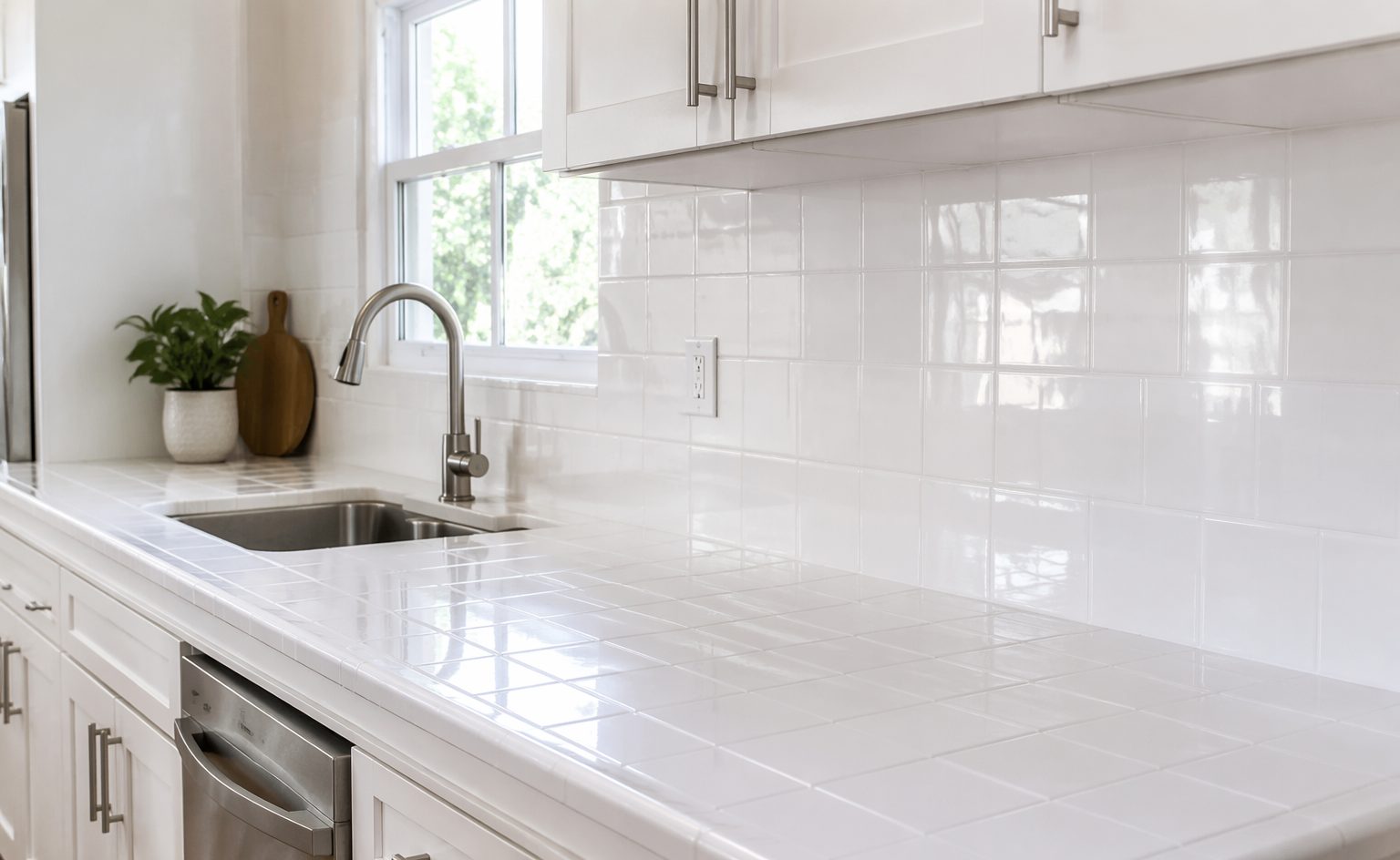
This guide covers the kitchen version of tile work: counters, backsplashes, and why the two belong to one project.
The Problem With Grout on a Work Surface
Grout lines on a wall collect soap. Grout lines on a counter collect coffee, oil, tomato, wine, and whatever got set down in a hurry, and unlike a wall, a counter gets wiped hard several times a day. The result in most tiled kitchens is a surface that reads as unclean no matter the effort, plus a texture that makes rolling dough or sliding a plate slightly annoying forever. Refinishing seals the tile faces and the grout lines into one continuous plane, so the counter wipes in a pass and stops arguing with you.
Why the Backsplash Comes With It
The backsplash is usually the same tile, installed the same year, aged by the same kitchen. Renewing the counter and leaving the backsplash produces a kitchen where the new surface makes the old one look worse, which is the opposite of the goal. Running both in one visit shares the masking, the working sequence, and the single 48 hour cure, and it is the version almost every kitchen chooses once the two are quoted side by side.
What a Kitchen Job Asks That a Bathroom Does Not
The sequence is the same seven steps walked at how tile refinishing works, with two kitchen realities layered on top. Degreasing carries more weight, because years of cooking oil sit in a film that no coating will bond through. And the masking is more involved, since appliances, outlets, cabinet faces, and the sink all sit within arm’s reach of the work. Neither changes the timeline. Both change how carefully the first hour is spent.
Colors and the Dated Kitchen
Tile counters carry their decade louder than almost any surface in a house. The four inch squares in almond, the burgundy accent row, the speckled pattern that was everywhere for a while: all of it is structurally fine and visually stuck. Because the new finish is itself the new color, a color reset costs no extra step in the project, and samples are chosen in your own kitchen light at the quote rather than under showroom light. Period kitchens that want their original color preserved simply renew it in place.
The Whole Kitchen Version
Counters and backsplashes rarely tire alone either. The sink took the same years, and in many kitchens so did a laminate or cultured marble counter run on the other side of the room. Those surfaces refinish too, and coordinating them into one project is the difference between a kitchen that matches and a kitchen with one new patch. The counter side is at countertop refinishing, the basin at sink reglazing, and the coordination logic at the kitchen and bathroom surface makeover.
Living With a Refinished Tile Counter
- Give the finish its full 48 hour cure before the counter returns to service.
- Cut on a board. A refinished surface is a counter, not a cutting surface, which was true of the tile before it too.
- Set hot pans on a trivet rather than directly on the finish.
- Clean with non-abrasive products and a soft cloth, and skip scouring pads entirely.
- Wipe spills when they happen, which is genuinely easier now that nothing is soaking into a grout line.
That is the whole regimen, and the honest note inside it is that a tile counter always wanted those habits. Refinishing just removes the part where the grout punished you for missing one.
The Sink Cutout Deserves Its Own Look
On tiled counters the sink cutout is where age concentrates: the trim tiles around the rim take standing water daily, the caulk line there fails before anything else does, and it is the first place a substrate problem announces itself. Preparation addresses the cosmetic side, repairing chipped rim tiles and rebuilding the plane. What preparation cannot fix is a soft or swollen substrate underneath, so that area gets checked first on every kitchen we quote, and it is the single most common reason a tile counter turns out not to be a candidate.
When a Tile Counter Is Not a Candidate
The boundaries are the same as anywhere else in this trade, with one kitchen specific addition. Loose or hollow sounding tile, cracks running across multiple tiles, and water damage at the sink cutout all mean repair comes first. The addition: a counter that flexes when you lean on it has a substrate problem, and a substrate problem is not a surface job. We read all of that from photos and tell you plainly, because a finish over a moving surface fails and both of us know who gets the call.
Counters, Islands, and the Edge Question
Most tiled kitchen counters in this city include a bullnose or trim edge, and that edge is where chips and wear concentrate, because it takes every dish that gets set down too hard. Those edge chips are repaired during preparation and rebuilt to the counter line before any coating goes on, which matters visually more than people expect: the edge is what your eye follows along the length of a counter. Tiled islands follow the same treatment, with the practical note that an island is worked from all four sides and therefore masks a little wider into the room.
Backsplash Only, and When That Makes Sense
Not every kitchen needs the counter touched. Plenty of Los Angeles kitchens have a stone or newer laminate counter installed at some point over a tiled backsplash that never got replaced, leaving one dated element in an otherwise current room. A backsplash on its own is a small, contained project, and it is often the highest-impact single thing available in that kitchen, because the backsplash sits at eye level in every photograph and every conversation. The same sequence applies at a smaller scale, with the degreasing stage carrying the same weight it always does behind a range.
Kitchens at Portfolio Scale
Landlords and managers run the same play in kitchens that they run in bathrooms, batching units and scheduling around turnover. The rental version is covered at tile refinishing for rentals and apartments.
The Timeline in a Working Kitchen
The work is one scheduled visit, and the finish cures for 48 hours after the final coat before the counter goes back into service. Households usually plan around that with a couple of simple moves: clear the counters the night before, plan two days of meals that do not need the prep surface, and keep the sink area accessible where the layout allows. Compared with a counter replacement, which brings demolition, template and fabrication lead time, and a second visit for installation, the disruption is measured in meals rather than weeks.
To see our completed projects and verified customer reviews, read verified Countertops Tile Los Reglazing Countertop Backsplashes Reglaze Backsplash Angeles customer reviews and testimonials.
Get Your Kitchen Read
Photograph the counter straight on, the backsplash, and one close shot of the grout lines, and send them through our free quote page or call (818) 858-1150. The full service is at ceramic tile refinishing. JLF Tub & Tile Reglazing serves residential and commercial properties throughout the Los Angeles metropolitan area and Simi Valley, California, and has since 2016.