
Most of the countertops in Los Angeles kitchens and bathrooms can be refinished: laminate, cultured marble, solid surface, and tile counters all take renewal, each with its own preparation story, and the honest disqualifiers are structural, not cosmetic. This post is the materials map: what each surface is, how it renews, which counters need their own specialist page, and the failure conditions that route to replacement instead.
Laminate: The Classic Candidate
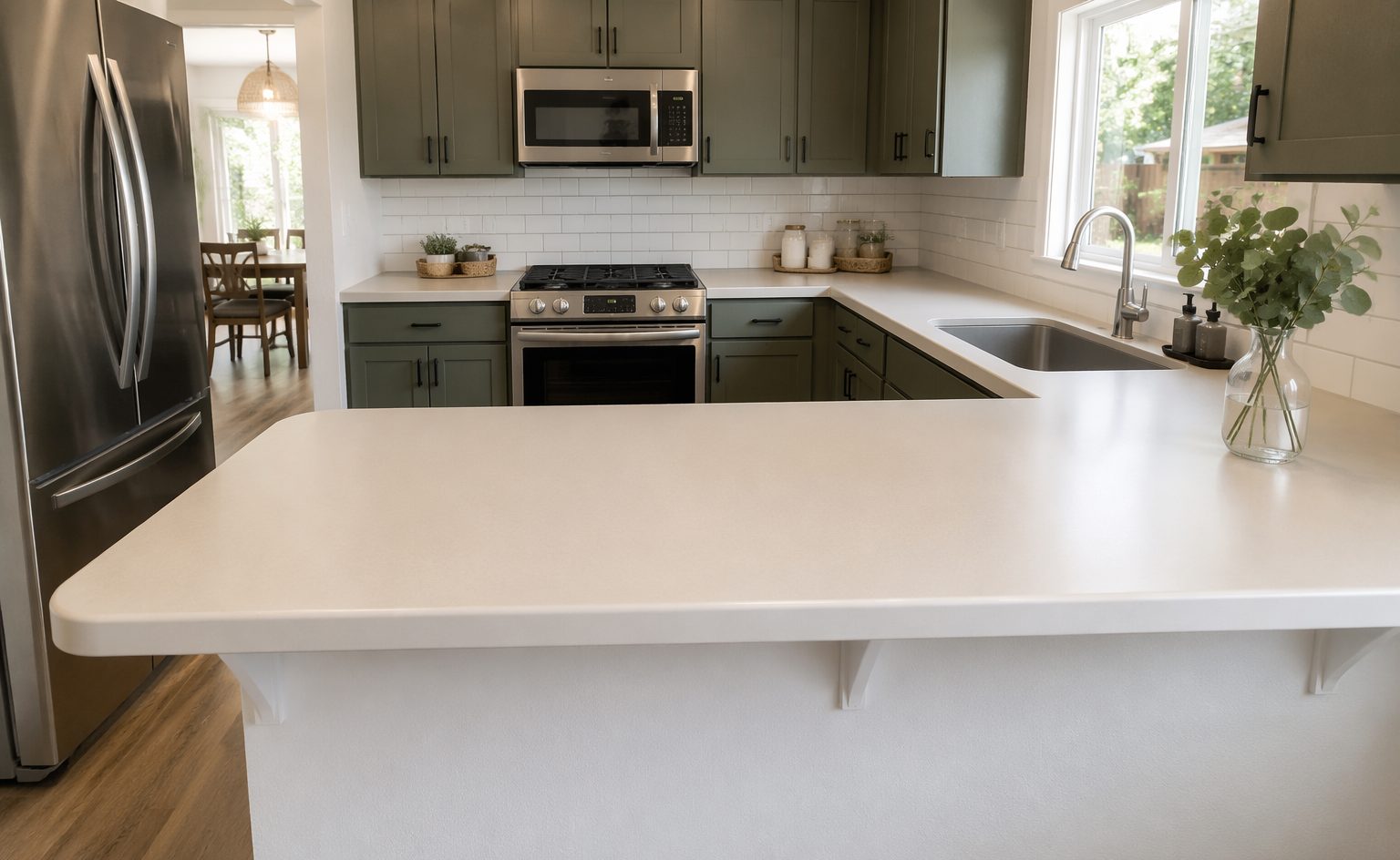
Laminate is the workhorse of Los Angeles housing stock and the most-refinished counter material in the trade: a decorative layer over a substrate, worn at the edges, dated in its pattern, and perfectly suited to renewal because the coating replaces the tired decorative story with a new one. The one laminate-specific check is the substrate: edges lifting or swelling from water mean the base has been compromised, and that condition is assessed honestly from photos before anything is promised.
Cultured Marble: The Bathroom Star
Cultured marble vanity tops, often molded as one piece with their basins, renew as a single surface, deck, basin, and backsplash lip in the same coats, which is both the correct treatment and the dramatic one. The material has enough of its own story, the integrated format, the color work, the vanity context, that it carries its own page at cultured marble countertop and vanity refinishing.
Solid Surface: The Quiet Qualifier
Solid-surface counters take renewal well: the material is stable, prepares predictably, and rewards the repair stage since gouges and burns rebuild cleanly before coating. Households often assume these counters are premium enough to be off the table; they are not, and renewing one costs a fraction of what its replacement conversation opens with.
Tile Counters: The Grout Story
- The tiles themselves refinish the way wall tile does
- The grout lines are part of the surface and part of the preparation
- The result is a unified renewed surface where the grout stops being the maintenance story
Tile counters and backsplashes sit at the meeting point of two of our services, and their full treatment lives with the tile cluster at reglazing tile countertops and backsplashes; this page’s job is only to say plainly that they qualify.
Integrated Sinks and the One-Surface Rule
Where a counter and its basin are one molded piece, they renew as one surface in the same project, never as two appointments. Where a drop-in or undermount sink sits in the counter, the two can renew together in one visit, sharing masking and the cure, and the sink half of that story is at kitchen sink reglazing.
The Honest Disqualifiers
Refinishing renews surfaces; it does not repair structures. Substrates swollen or delaminating from long water exposure, counters sagging or pulling from their cabinets, and active leaks underneath route to their own trades first, and we say so from photos. Everything short of that, wear, stains, burns, chips, dated patterns, a previous coating, is the ordinary jurisdiction of renewal, and it is most of what Los Angeles kitchens and bathrooms actually have.
What About Stone?
Natural stone counters, granite and marble slabs, live in a different maintenance tradition, sealing and polishing by stone specialists, and honest scope means saying so: our renewal serves the manufactured surfaces above, where a coating is the surface. If your counter is slab stone, the right trade is a stone restorer, and a company that would coat granite to win a job is telling you everything about its other answers.
How the Renewal Runs, Whatever the Material
The sequence holds across every qualifying surface: deep cleaning, repairs first, mechanical preparation, controlled coats, and the 24 hour cure after the final coat. The craft is walked at how countertop refinishing works, and the material chapter above only changes the preparation chemistry, never the order.
Reading Your Own Counter
Three photos answer the material question for nearly every counter: the full run from standing height, the worst wear close, and the sink area where materials meet. If the material is genuinely ambiguous, an edge photo usually settles it, laminate shows its layers, cultured marble its molded returns, solid surface its uniform body. The reply names the material, the honest path, and the number.
Bathroom Counters, the Same Map
Everything above serves vanity tops as well as kitchen runs: laminate vanities renew like laminate counters, cultured marble dominates the bathroom category with its own page, and integrated units follow the one-surface rule. Bathrooms mostly change the masking logistics and shrink the square footage, which is why vanity projects pair so naturally with tub and tile work in the same visit.
Previous Coatings Change the Path, Not the Verdict
A counter wearing an old refinish or a weekend paint kit still qualifies; it simply adds a stripping chapter before the sequence starts, because coating over a failing layer inherits the failure. The stripping is honest labor and quoted as such, and the surface underneath is almost always the same candidate it was before the kit.
Why the Material Question Comes First
Preparation chemistry is material-specific: what degreases laminate, what bonds to cultured marble, how tile grout is treated, and how solid surface is repaired all differ, and a company that quotes without asking what your counter is made of is planning to find out on work day. The material read from photos is the first professional act of the project, which is why this page exists at the front of the cluster.
The Two-Minute Self-Check
Before sending photos, two checks sharpen the reply: press gently near the sink and along front edges, since softness or flex means water reached the substrate and changes the conversation; and look under the counter at the sink cabinet ceiling, since stains there tell the water story from below. Neither disqualifies by itself; both belong in the message if found, because honest inputs produce quotes that hold.
One Map, One Visit
The materials above frequently share a room, laminate runs beside a tile backsplash, a cultured marble vanity across from a porcelain sink, and the renewal treats the room as the unit: qualifying surfaces renew together, sharing masking, mobilization, and the cure. The map’s practical use is exactly that conversation, naming everything tired in one message so the quote shows the whole-room version alongside the single-surface one.
The Age Question, Retired
Counter age never disqualifies; condition does. A forty-year-old laminate run with a sound substrate is a better candidate than a five-year-old counter that lived under a leak, which is why the photos ask about softness and swelling rather than install dates, and why the oldest kitchens in our gallery carry some of its best afters.
Why This Page Leads the Cluster
Every counter question downstream, cost, process, color, damage, starts by assuming the material is known, and most homeowners genuinely are not sure what their counters are made of. Settling that first, from three photos, is what turns the rest of the cluster from theory into your kitchen’s actual plan.
To see our completed projects and what customers say, read our verified customer reviews and testimonials.
Getting Your Answer
Send the photo set through our free quote page or call (818) 858-1150, and the reply covers material, damage, and the project for your specific counters. The kitchen-wide story is at kitchen countertop refinishing, the damage-first version at refinishing stained and damaged countertops, and the whole service at countertop refinishing.