
Stained, burned, and damaged countertops are the renewal’s home territory: stains live in a worn surface that refinishing replaces outright, burns and gouges are ground out and rebuilt before coating, and the finished counter carries no memory of any of it. The honest boundaries are structural, and this post walks each damage type, the fix that actually lasts, and the conditions that route to replacement instead.
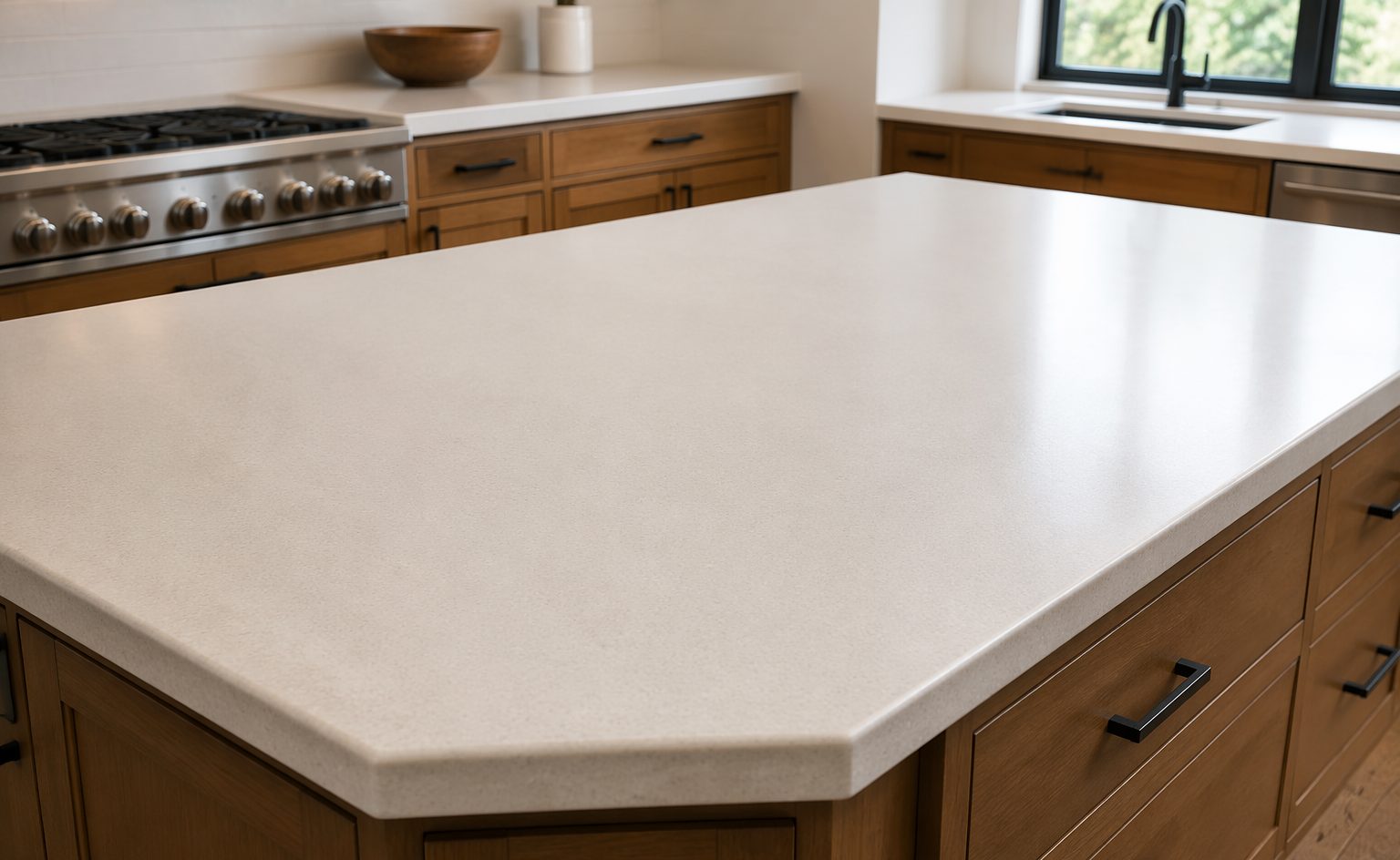
Stains: The Surface Problem That Looks Permanent
Coffee rings, turmeric, wine shadows, dye transfer, and the general darkening around sinks and coffee stations all share one anatomy: a worn, porous surface gripping pigment the way it never did when new. Scrubbing fights the symptom and roughens the surface further. Refinishing removes the problem’s habitat, the stained layer stops being the surface, and the new finish starts smooth and sealed, which is why renewed counters shrug off the same spills that ruined their predecessors.
Burns and Scorch Marks
The pan that met the laminate directly leaves a scorch no cleaner touches, and the honest repair is subtractive first: the burned material is ground out, the area rebuilt flush to the plane, and the whole counter refinished so the repair vanishes into a uniform surface. Coating over a burn saves an hour and telegraphs a shadow forever; grinding it out is the difference between fixed and hidden.
Chips, Gouges, and Edge Wear
- Chips at the sink rim and edges: rebuilt flush, then refinished into invisibility
- Knife gouges from the cutting-board-free years: filled, leveled, coated
- Worn or lifted edge banding on laminate: stabilized and rebuilt where the substrate underneath is sound
Flatness is the standard every repair answers to, because counters live under raking light that publishes every shortcut. Repairs built flush disappear; repairs mounded or dished announce themselves at 8 a.m. daily.
Water Damage: The Honest Line
Water is where honesty earns its keep. Surface water marks and rings renew like any stain. Substrate swelling, edges puffing, laminate lifting, a counter that feels soft near the sink, means water reached the base material, and coating over a compromised substrate manufactures a failure on a schedule. Those counters route to repair or replacement first, we say so from photos, and the materials-level version of the boundary is at what countertops can be refinished.
The Previous-Coating Complication
Damaged counters attract hopeful paint-kit weekends, and a failing kit over damage fails faster than either alone. The honest fix strips the kit completely, repairs what it hid, and refinishes the actual surface; the bond doctrine behind why recoating over failure never holds is walked at why reglazed surfaces peel, and it reads identically on a counter.
The Repair-First Sequence
Whatever mix of damage your counter carries, the order never changes: clean and degrease, repair everything first, prepare the surface mechanically, then build the coating in controlled coats and cure it 48 hours after the final coat. The full craft is at how countertop refinishing works, and damage-heavy counters simply spend longer in the repair stage, which is exactly where they should.
When Replacement Genuinely Wins
Structural failure decides it: swollen or delaminating substrates, counters pulling from cabinets, chronic leaks underneath. Cosmetic severity never does; the most stained, burned, dated counter with a sound base is a routine renewal, and the gallery’s favorite category. An honest company sorts your counter into the right column from photos, before any money moves.
The Whole-Kitchen Moment
A damaged counter usually has company, the sink chipped where the counter chipped, the backsplash tired behind it, and the repair visit is the natural moment to renew the set: one mobilization, one masking, one cure, one restored kitchen. The room-level case is at kitchen countertop refinishing.
Photographing Damage So the Quote Lands Right
Straight-on for the full run, close and angled for each damaged area so depth reads, the sink rim dead-on, and anything burned or swollen in raking light. The reply names what repairs, what needs assessment, and the number for the honest project, with no surprises waiting for work day.
The Stain That Comes Back, Explained
A stain scrubbed out of a worn counter returns because the porosity that held it is still there; the pigment left, the habitat stayed. That cycle, scrub, fade, return, is the surface announcing it has reached the end of its sealed life, and it is the single most common story in the counter photos we receive. Renewal ends the cycle by replacing the habitat, which is why the same coffee that stained the old surface wipes off the new one.
Rental Counters and the Damage Ledger
Turnover inspections read counters the way this page does: stains and burns are surface history, softness at the sink is a maintenance flag, and the renewal inside the vacancy week resets the unit’s kitchen for listing photos. Operators fold the counter line into the same turnover system the tub and sink ride, and the damage-deposit conversations get shorter when the surfaces start each tenancy documented and new.
Prevention, Priced at Zero
The renewed counter’s enemies are the original counter’s enemies: knives without boards, cookware without trivets, abrasive pads, and standing water at the sink seam. Every one is a habit, not a product, and a kitchen that adopts the four habits gets the decade without thinking about the surface again.
Burn Prevention After the Renewal, One Honest Note
The renewed surface is a durable working finish, not a stovetop: hot cookware rests on trivets, the same rule every counter material in every kitchen deserves. Households that lost the original surface to a direct pan land tend to become the routine’s best practitioners, and the finish rewards them with the decade it was built for.
What the After Looks Like
A uniform, level surface in the chosen finish, with the scorch gone because its material is gone, the stains gone because their habitat is gone, and the edges reading crisp under the morning light that used to publish the damage. The before and after gallery keeps the receipts, and damaged counters are its most dramatic category after dated tubs.
The Repair Questions Worth Asking Anyone
Ask what gets ground out versus filled, whether repairs are leveled to the plane before coating, what happens when stripping reveals more than the photos showed, and the exact hours from final coat to first use. Specific answers predict a flat, permanent surface; vague ones predict shadows in the morning light.
Living Around Damage Versus Ending It
Damaged counters extract a quiet daily tax: the cutting board positioned to hide the burn, the canisters arranged over the stains, the kitchen apologized for before guests arrive. Against that, the renewal is one visit and two cure days, priced from photos before any commitment, and the most common after-the-fact review sentiment is the same one the tub pages report: the expensive part was the years spent deciding.
The Short Version
Stains, burns, chips, and gouges are surface history, and refinishing replaces the surface; swollen substrates and structural failure are the honest exceptions, named from photos before money moves. Everything else on this page is the detail behind those two sentences.
To see our completed projects and verified customer reviews, read verified Countertops Damaged Refinishing Los Stained Refinish Angeles customer reviews and testimonials.
If Your Counter Is Damaged Now
Send the set through our free quote page or call (818) 858-1150. Damage travels one direction, chips widen, burns collect grime, water finds openings, and the quote from this month’s photos is the smaller one. The whole service picture lives at countertop refinishing.