
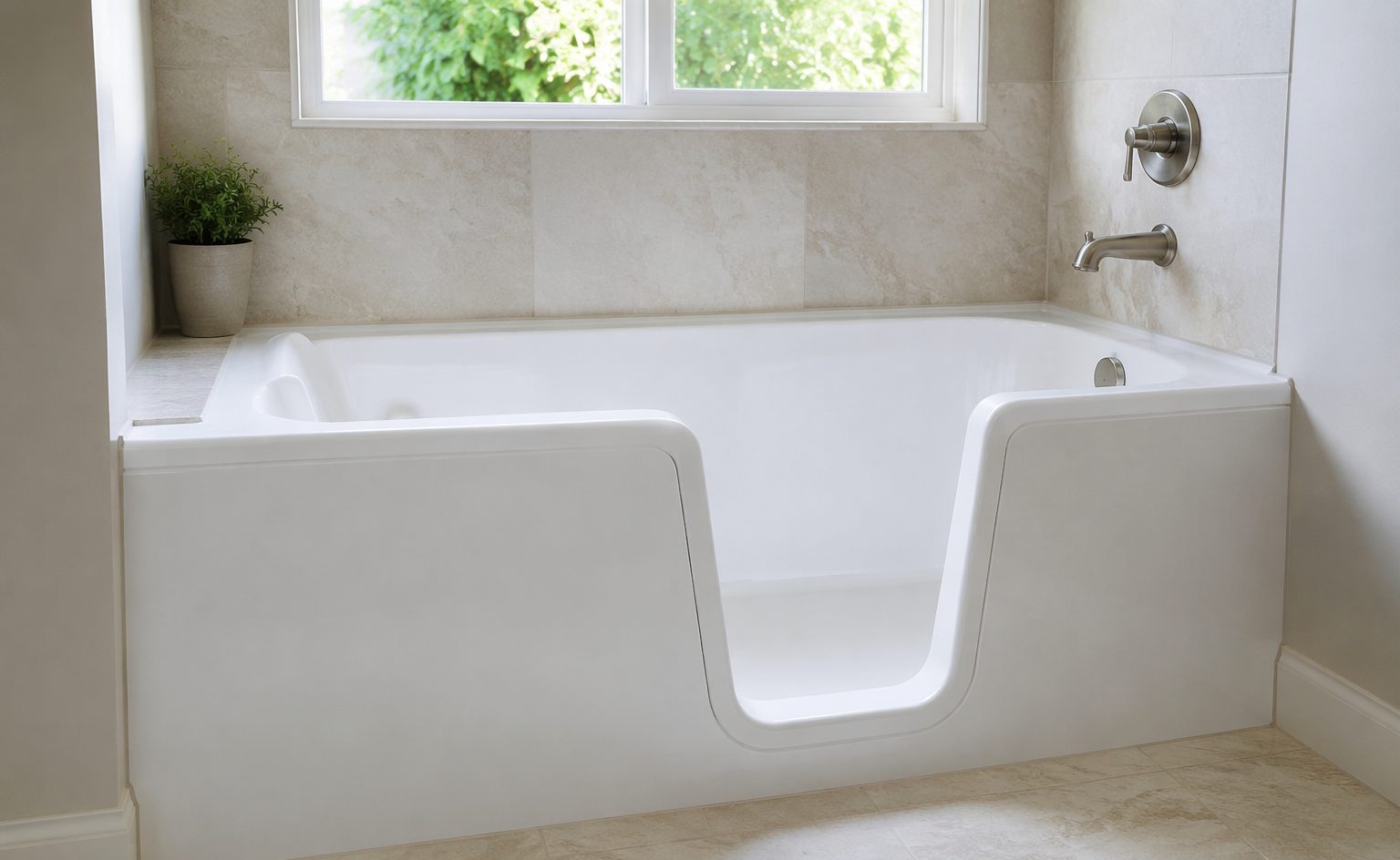
A tub step-in conversion works by cutting a precisely measured section out of the tub wall at the entry point, finishing the cut edges, and bonding a custom form-fitted step into the opening, sealed watertight, with the whole project completing within a 48 hour window. Every step exists to make the finished entry read as designed rather than modified, and this post walks the craft in order, from the first photos to the sealed result.
Step One: Assessment From Photos
The project starts with two photos, the whole tub from the doorway and the entry wall straight on, which establish the tub’s material, the wall’s geometry, and how the household uses the space. This is also where the honest conversation happens about which conversion fits, the step version that keeps the tub a tub or the fuller shower format, walked at converting a tub to a step-in shower.
Step Two: Measuring the Cut
The opening is laid out before anything is cut: its width for a comfortable step-through, its depth for the entry height the household needs, and its position along the wall for the room’s traffic. The custom form-fitted step that will finish the opening is matched to this exact geometry, which is why the measuring stage is unhurried and the cutting stage is confident.
Step Three: Protecting the Room
Cutting a tub wall is precision work with real dust, and the room is prepared for it: the work area masked and contained, the tub protected beyond the cut zone, floors covered along the working path, and cleanup planned as part of the job rather than an apology after it. The protection standard is the same one that governs our refinishing work, detailed at Your Protected company.
Step Four: The Cut
The measured section comes out of the wall in a controlled cut, sized to the step that will fill it. On enameled steel and cast iron tubs the cut exposes metal; on fiberglass and acrylic it exposes the shell layers; each material has its own cutting approach and its own edge treatment, and knowing the difference is a large part of why this is professional work rather than a rental-tool weekend.
Step Five: Finishing the Edges
- Cut edges are smoothed and treated so nothing sharp or raw remains
- Exposed material is sealed against moisture before anything covers it
- The opening is prepared as a bonding surface for the step piece
This stage is invisible in the finished project and responsible for most of its longevity: an edge sealed correctly never becomes a moisture problem, and a bonding surface prepared correctly holds its step for the life of the tub.
Step Six: Installing the Custom Form-Fitted Step
The step piece is fitted to the opening, bonded, and sealed watertight along every seam. Fit is the whole game: a piece shaped to the actual cut sits flush, sheds water correctly, and reads as part of the tub, which is exactly the standard the finished entry is judged by. Once sealed, the entry is structural, not decorative; it is built to be stepped on every day.
Step Seven: Surface Work, If the Project Includes It
Conversions pair naturally with refinishing, and this is where the pairing happens: the tub reglazed in the same project so the converted entry and the renewed surface arrive together, and a slip-resistant floor texture built in where the household wants footing confidence. The pairing case is at step-in conversion and reglazing together, and the traction option at non-slip bathtub coating.
Step Eight: Sealing, Curing, and the 48 Hour Window
Seals and any coating work cure on their own schedule, and the honest promise is the window, not a stopwatch: the conversion completes within 48 hours, including the curing the materials require before daily use. A company that quotes the window plainly is describing chemistry; one that promises everything faster is describing marketing, and the difference shows up at the seams in a year.
What You Should See When It Is Done
A clean opening with a flush, sealed, solid step; edges finished so the eye reads intention; water behaving correctly at every seam; and a tub that is simply easier to enter, looking like it was always meant to be. If the project included refinishing, the whole tub arrives renewed at the same moment, which is the version most households photograph.
The Questions That Test Any Installer
Ask how they measure before cutting, how they treat and seal the cut edges, whether the step is fitted to the opening or the opening forced to a stock piece, and what completes within what window. The answers above are the scorecard, and the vetting method that applies to every trade in your bathroom lives at how to choose the right bathroom renovation company.
Why the Craft Order Never Changes
Measure before cutting, seal before covering, bond before loading: each stage exists because the one after it depends on it, and every long-lived conversion in our gallery followed the same order. When a finished entry fails early somewhere in the world, the story is almost always a skipped stage wearing a schedule excuse, which is why the order is the standard and the window is honest about what the order needs.
How Long the Finished Entry Lasts
A properly measured, sealed, and bonded entry is built for daily loading across the years the household needs it, and its maintenance is ordinary: keep seams clean, report anything that ever looks lifted, and clean the surfaces with the same non-abrasive routine as any renewed finish, covered at bathtub reglazing aftercare. The entry is structural work; treated with ordinary sense, it simply becomes how the tub has always been.
Both Conversion Styles, One Craft
Everything above serves the step conversion and the fuller shower version alike; the styles differ in the opening’s geometry, not the standards behind it. The choosing between them is a household question, walked at can you still take baths after a tub conversion, and whichever answer fits, the craft order on this page is what you are actually buying.
What the Homeowner Does During the Project
Very little, by design: clear the tub and its surround before the crew arrives, keep the household clear of the contained work area, and plan bathing around the window. The project ends with a walkthrough of the finished entry, the sealing explained, and any surface-work care instructions in hand, the same handoff standard every job on this site closes with.
Renewing More Than the Entry
Bathrooms that earn a conversion usually show their years elsewhere too, and the same visit logic that pairs the cut with a reglaze extends across the room: the surround, the sink, the counter can all renew in coordinated work, arriving at a bathroom that matches its new entry. The room-level version of that thinking lives at shower and tub combo reglazing.
Starting Yours
Two photos through our free quote page or a call to (818) 858-1150 starts the assessment, and the full service picture, both conversion styles and every pairing, lives at Senior Access Bathroom Conversions in Los. The craft above is the whole story; the quote puts your tub’s specifics into it.