
Refinish when the counter’s substrate is sound and the surface is the complaint; replace when the substrate has failed, the layout is changing, or the household genuinely wants slab stone as a material upgrade. Most kitchens and vanities sort themselves with that sentence; this post walks the true scopes behind both paths so the sorting is honest.
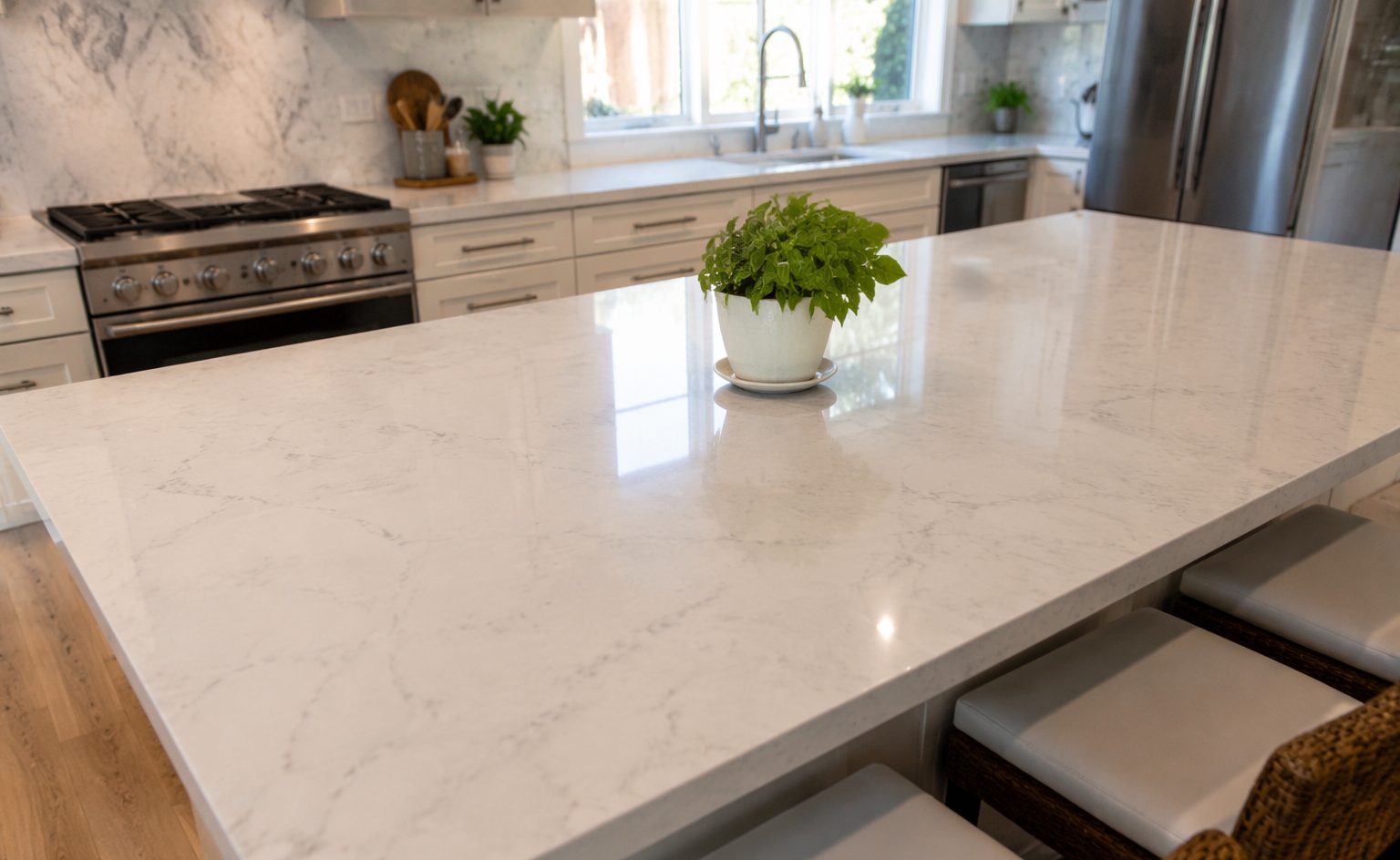
The True Scope of Replacement
Counter replacement is never just a counter. The old surface comes off, which disturbs the backsplash line and the wall behind it; the sink comes out, undermounts by unbonding, drop-ins by cutout luck; plumbing disconnects and reconnects; slab and fabrication lead times set the calendar; and the trades arrive in sequence, template, fabricate, install, plumb. It is a legitimate renovation move, and it should be chosen as one, with its whole scope priced in writing, never backed into from a stain.
The True Scope of Refinishing
Refinishing renews the surface in place: repair, preparation, coating system, cure, the craft at how countertop refinishing works. The sink stays plumbed, the backsplash stays put, the kitchen closes for the work and the 48 hour cure rather than for a project calendar, and the color updates as part of the work, at changing a countertop’s color.
Where Replacement Honestly Wins
- Substrate failure: water-swollen particleboard, delamination, movement under the surface
- Layout change: the project is a remodel, and the counter should be born into the new plan
- The material upgrade chosen for itself: a household that wants slab stone should have slab stone, priced and scheduled honestly by its fabricators
- Damage below the surface, sorted by the assessment at refinishing stained and damaged countertops
We say these from photos when they apply, because a renewal sold onto a failed substrate becomes our warranty problem and your disappointment, and neither is worth the job.
Where Refinishing Wins, and Why It Usually Does
The renewal case owns the middle of the market: the laminate kitchen whose surface is dated but whose boxes and layout are fine, the cultured marble vanity top with worn gel coat over a sound casting at cultured marble refinishing, the stained and scorched work zones that read as ruin and repair as surface. Candidacy is a materials question, mapped at what countertops can be refinished, and when the material qualifies, the arithmetic rarely stays close.
Compare Whole Scopes, Not Headline Numbers
The category’s classic mistake is comparing a refinishing quote against a slab price, product figure versus project figure. Ask any replacement bidder for the all-in written number, removal, fabrication, sink and plumbing work, backsplash repair, schedule, and set it beside the renewal’s all-in written number. Whole scope against whole scope, the decision usually makes itself, and either way it gets made on paper.
The Timing Axis Households Forget
Replacement runs on fabrication calendars; refinishing runs on yours. Kitchens that need to stay in service, listings racing an escrow date, and rentals turning between tenants all weigh the calendar as hard as the invoice, which is why sellers and operators land on renewal almost by default, the portfolio version lives at reglazing for property managers.
The Middle Case: Refinish Now, Remodel Later
Plenty of households want the remodel eventually and need the kitchen presentable now. Renewal serves exactly that sequence: the counter leaves its decade this month at surface scope, the remodel arrives on its own timeline years from now, and nothing about the renewal complicates it. Buying years of good service while the bigger plan matures is not settling; it is sequencing.
The Kitchen Downtime Ledger
Replacement’s calendar is longer than its brochure: template measurement, fabrication lead time, the demolition day, sink and faucet disconnection, installation, and the backsplash repair that tearing out a counter frequently forces. For the span between demolition and installation, the kitchen runs without counters, and households that have lived that span once tend to remember it vividly when the next dated surface comes up for discussion.
Refinishing’s calendar is one crew visit plus a 48 hour cure with the sink and faucet connected throughout, which is why it schedules around ordinary weeks instead of remodel seasons. Neither calendar is a verdict by itself; both belong beside the whole-scope numbers this post insists on, because time is a cost the headline figure never itemizes.
The Seller’s Version of the Decision
Pre-listing kitchens compress this whole post into one question: which path returns a photograph-ready kitchen before the listing date. Replacement rarely can, because fabrication lead times do not negotiate with listing calendars, and a mid-escrow counter project is a risk no agent enjoys. Refinishing fits inside a listing week, retires the dated color buyers price against, and lets the kitchen photograph as kept rather than tired.
Buyers read counters as a proxy for the whole house’s maintenance story, the same way they read kitchens generally at kitchen countertop refinishing in Los Angeles. A seller is not buying decades of service from the decision; a seller is buying the photograph and the offer it shapes, which is exactly the job a renewal does best.
Reading Your Own Counter Before Deciding
The decision sharpens considerably once you read the counter you actually own, and the reading takes five minutes. Press along the surface near the sink cutout, the most water-tested territory on any counter, and note whether it feels solid or gives slightly, because a soft or swollen substrate is telling you about water intrusion below the surface, and that is a story the two photos should include. Look at the seams and edges for lifting or separation, and sight down the length of the counter in raking light to see whether the plane is true.
A solid counter with surface complaints, stains, burns, dullness, a dated color, is the standard refinishing candidate, and the damage side of that story is covered honestly at refinishing stained and damaged countertops. A counter that is structurally failing beneath its surface has answered the question in replacement’s favor, and a company that coats over that answer is manufacturing a callback. Send the photographs either way; the reply will tell you which story your counter is telling, and it costs nothing to hear it.
One more reading worth thirty seconds: open the cabinet under the sink and look up at the counter’s underside with a flashlight. Water stains, swollen particleboard, or a musty smell down there are the earliest honest witnesses to a leak the top surface has been hiding, and they belong in the photo set you send. A dry, sound underside with a tired top surface is the classic refinishing profile; an underside that has been drinking for years moves the conversation, and it is far better to have that conversation at the quote than on the work day. Either way, the five-minute reading means the decision gets made about your counter rather than about counters in general.
Making the Call From Two Photos
Photograph the counter from above and the room straight on, and answer three questions in the message: is anything swollen, soft, or moving underneath; is the layout staying; is the complaint about how the surface looks and wears. Sound, staying, surface: refinish, and the reply prices it. Failed, changing, or stone-wanted: replace, and the reply says so plainly instead of selling against your interest. Send the set through our free quote page or call (818) 858-1150; the whole service lives at countertop refinishing, and the kitchen’s full case at kitchen countertop refinishing.