
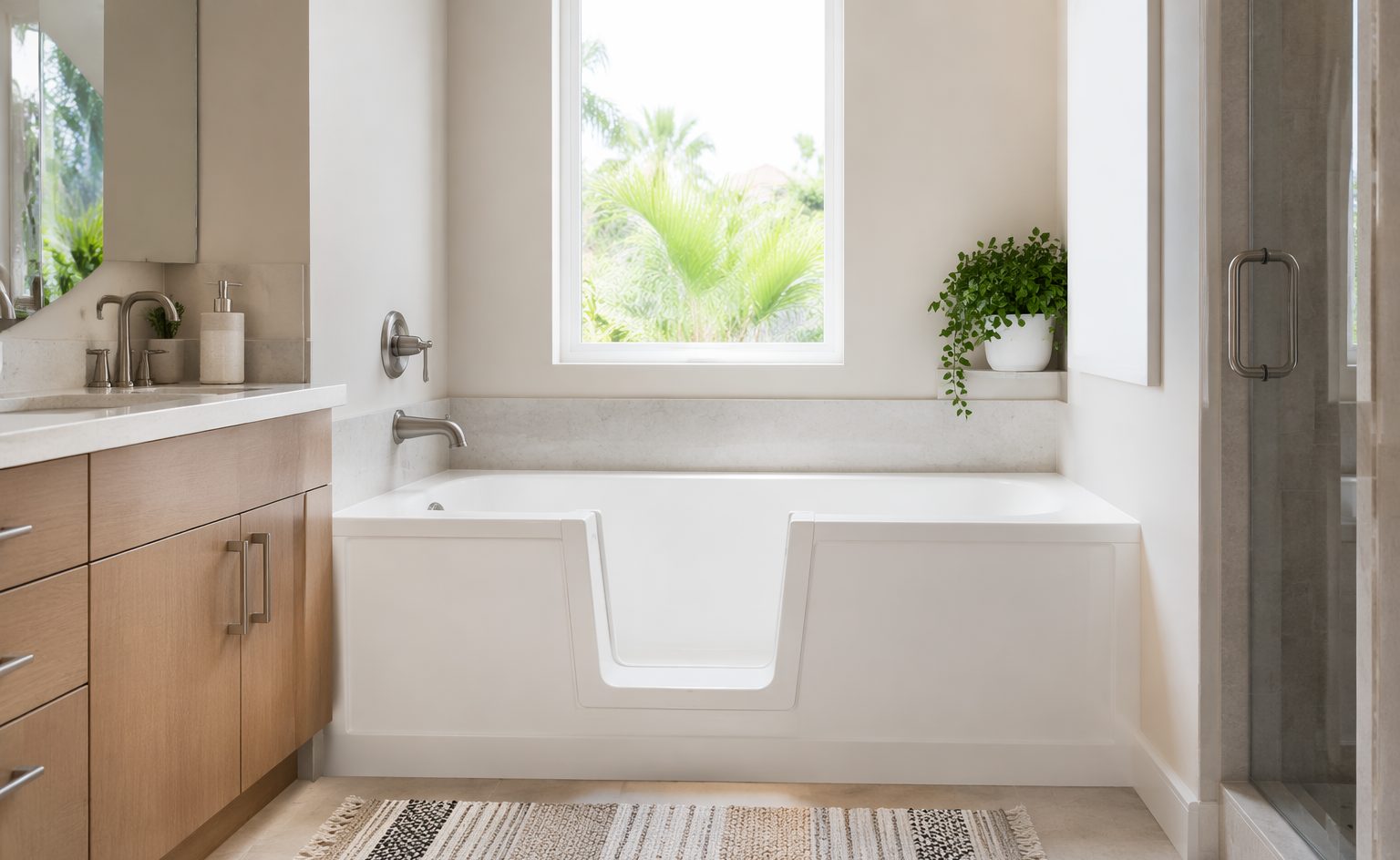
A tub conversion modifies the tub you own, cutting the wall and installing a custom form-fitted step within a 48 hour window; a walk-in tub replaces it entirely with a purchased fixture, a door-and-seat unit that arrives through a removal and installation project. Both answer the entry problem, they answer it differently, and the honest comparison is about which change your household actually needs. We perform conversions and we do not sell or install walk-in tubs, so this page’s job is clean framing, not a sales argument.
What Each One Is
The conversion is precision modification: your existing tub stays plumbed and placed, a section of its wall is cut, and a custom form-fitted step finishes the opening into a low step-through entry. The walk-in tub is a product category: a purpose-built fixture with a sealed door and an integrated seat, purchased from its own vendors and installed where your current tub sits, which means the current tub’s removal and the plumbing work that follows any fixture swap.
The Bathing Difference, Stated Plainly
The categories serve different bathing styles. The conversion keeps your tub’s bathing character, and whether baths remain in the routine depends on the configuration chosen, walked honestly at can you still take baths after a tub conversion. The walk-in tub is built around seated soaking behind its sealed door, with the fill-and-drain rhythm that design carries, since the door opens only when the water is out. Neither style is wrong; they are different answers to different wants.
The Disruption Difference
- Conversion: work on the tub in place, completing within a 48 hour window, bathroom otherwise untouched
- Walk-in tub: the existing tub removed, the new fixture delivered and installed, plumbing connected, and the surround addressed where the old tub met it
Replacement projects are legitimate projects; they are simply bigger ones, and a household choosing the walk-in category should choose it for its bathing style, with the installation scope priced and scheduled honestly by its vendor, not discovered.
The Cost Frames, Without Numbers
We publish no prices, ours or anyone’s, and the structural frame is enough for the decision: the conversion prices as precision work on one fixture you already own, its anatomy at step-in tub conversion cost; the walk-in path prices as a purchased fixture plus a replacement project. Ask any walk-in vendor for their all-in written number, product, removal, installation, plumbing, surround work, and compare whole scopes, never the product figure against the project figure.
Where the Conversion Fits Best
Households that like their tub and their bathroom, want the climb gone, and want the change measured in days: the conversion is built for exactly that shape, covered in full at step-in tub conversion. It also keeps resale simple, a bathroom with its tub and a sensible entry, and it leaves every future option open, including, years from now, the walk-in category if needs change.
Where the Walk-In Tub Honestly Wins
Households whose bathing want is specifically seated soaking, who prefer a purpose-built fixture with its door and seat as designed features, and who are comfortable with a replacement project’s scope: that is the walk-in category’s home ground, and pretending otherwise would make this page advertising instead of a comparison. If that describes your household, choose that path with its own vendors, ask for everything in writing, and verify the installer’s license the same way you would verify ours.
The Questions That Serve You With Either Vendor
Ask what exactly is included in writing, what the project timeline is from start to first use, how the work is warranted and by whom, and what happens to the existing tub and the surfaces around it. Then verify the license on the CSLB site, a minute that filters both categories’ cash operators equally. A vendor precise on paper in either category is showing you the work; a vendor vague in either is showing you the aftermath.
The Middle Cases, Called Honestly
Two households sit between the categories. The bath lover with a hard climb usually lands on the step conversion configured for bathing, keeping the tub they love with the entry they need. The shower-only household eliminating every threshold often wants the fuller conversion into a step-in shower, at converting a tub to a step-in shower, rather than either tub-shaped answer. The sorting question is always the same: how does your household actually bathe, and what exactly needs to change about it.
What This Page Will Not Do
You will find no invented specifications, prices, or failure stories about walk-in tubs here, because we do not sell them and honest comparison does not need ammunition. The categories differ in what they change, what they cost structurally, and what bathing style they serve, and those differences are enough to decide with. Any vendor in either category who wins arguments by inventing the other side’s numbers is telling you how they will handle your project’s numbers too.
Resale, Compared
The conversion keeps the listing conversation simple: a bathroom with its tub and a sensible entry, readable by any buyer as a home someone made easier to live in. The walk-in fixture is a stronger statement in a listing, purpose-built and category-specific, which serves some buyers and gives others pause. Neither is disqualifying; households planning a sale inside a few years simply weigh the tub-preserving path’s flexibility a little heavier, and households settled for the long term weigh it not at all.
The Timeline Difference, Since Households Ask
The conversion completes within a 48 hour window on your tub as it sits. The walk-in path runs a product timeline plus a project timeline: selection and delivery of the fixture, then the removal-and-installation work its vendor schedules. Neither timeline is a criticism of the other; they are the honest shapes of modification versus replacement, and a household planning around a specific date should simply ask its chosen vendor for the whole calendar in writing.
One Decision Rule, If You Keep Only One
Choose by the bathing you want, not by the category you saw advertised first: seated soaking behind a door points to the walk-in fixture with its vendors; your own tub with an easier entry points to the conversion; a threshold-free shower points to the fuller conversion. The entry problem is solvable in all three directions, and the household that names its bathing want first cannot really choose wrong.
The Second Bathroom Wrinkle
Two-bathroom homes sometimes split the answer cleanly: the daily bathroom converted for its user, the second left tub-first for the household, and no category argument needed at all. It is worth naming because brochures frame this as an either-or, and floor plans frequently dissolve it.
Deciding From Your Bathroom, Not a Brochure
Two photos of your tub and one honest sentence about bathing habits produce a better recommendation than any category argument: if the conversion fits, the reply says how and quotes it; if your described want is genuinely the walk-in category’s, the reply says that too, because a recommendation you can trust is worth more than a job that fits badly. Send them through our free quote page or call (818) 858-1150, and the whole service picture sits at senior access conversions.